Yard Grading Secrets: Redirecting Stormwater on Long Island Lots

professional foundation grading

Summary:

Foundation grading isn’t about creating a perfectly level lawn—it’s about protecting your home from water damage that starts outside and finds its way in. For homeowners in Nassau County, NY and Suffolk County, NY dealing with basement moisture, foundation cracks, or water pooling after storms, the problem often begins with how your yard slopes. When the ground directs water toward your foundation instead of away from it, you’re inviting a cycle of damage that compounds over time. This guide walks through how to identify negative grading, why it’s a critical issue for Long Island properties, and what actually works to redirect stormwater before it becomes a basement problem.
Table of contents
You’ve seen it happen. A heavy rain rolls through Nassau County, and hours later there’s still a puddle sitting against your foundation. Maybe your basement feels damp. Maybe you’ve noticed a crack that wasn’t there last season. The culprit might not be your gutters or your sump pump—it could be the ground itself. When your yard slopes the wrong way, every storm sends water straight to the weakest point of your home. And on Long Island, where we get 47 inches of rain a year and weather that swings from nor’easters to summer downpours, improper foundation grading creates problems you can’t ignore. Here’s what you need to know about yard grading, how to spot the warning signs of negative slope, and what it takes to redirect water before it turns into a five-figure foundation repair.

What Foundation Grading Means for Long Island Homes

Foundation grading refers to the slope of the ground surrounding your house. It determines where water goes when it rains. When properly graded, that slope sends water away from your foundation. When it doesn’t, you’ve got negative grading—and that’s when damage begins.

Your foundation sits below ground level. If the soil around it slopes toward the house, every rainstorm funnels water directly to the most vulnerable part of your structure. That water doesn’t just sit there—it soaks into the soil, creates pressure against foundation walls, seeps through cracks, and eventually finds its way into your basement.

In Nassau County, NY and Suffolk County, NY, where much of the ground is either clay-heavy or covered in surfaces that don’t absorb water well, this issue gets amplified. You’re not just dealing with rain—you’re dealing with runoff from driveways, patios, and compacted soil that can’t handle the volume.

How to Identify Negative Slope Around Your Foundation

You don’t need specialized equipment to spot a grading problem. Start by watching what happens after a storm. If water pools near your foundation and takes more than a day to disappear, that’s your first clue.

Walk around your house a few hours after heavy rain. Look for areas where the ground stays soggy or where water collects in low spots against the foundation. If you’re seeing puddles that linger or soil that feels saturated days after a storm, your LI yard drainage isn’t working properly.

Here’s a simple test. Place a stake in the ground right next to your foundation. Walk 10 feet out and place another stake. Tie a string between them and use a level to make sure the string is straight. Now measure the distance from the string to the ground at both stakes.

The goal is at least 6 inches of drop over that 10-foot span. That’s the minimum slope needed to move water away from your house effectively. If the ground is flat or—worse—slopes upward toward your foundation, you’ve confirmed negative grading.

Other warning signs include cracks in foundation walls, basement moisture or musty smells, soil erosion around your property, or even an increase in pests like mosquitoes that breed in standing water. These aren’t just annoyances—they’re symptoms of a drainage system working against you instead of for you.

The tricky part is that negative grading can develop over time. Maybe you added a patio or flower bed that changed how water flows. Maybe the soil has settled since your house was built. What worked five years ago might not be protecting you now.

Why Nassau and Suffolk County Properties Face Drainage Challenges

Long Island isn’t just wet—it’s getting wetter. We’re seeing more frequent storms, heavier rainfall, and weather patterns that dump water faster than the ground can handle it. Add to that the fact that Nassau and Suffolk Counties are heavily developed, with paved surfaces and compacted soil that force water to run off instead of absorbing naturally.

When rain hits a forest or meadow, the soil and vegetation soak it up. When it hits a suburban lot with a lawn, driveway, and patio, that water has nowhere to go except toward the lowest point—which is often your foundation.

Long Island also sits on groundwater aquifers we rely on for drinking water. That means stormwater management matters for environmental reasons, but for homeowners the immediate concern is simpler: keeping water away from your basement.

Clay-heavy soil, common throughout the area, makes the problem worse. Clay doesn’t drain well. It holds water, expands when wet, and contracts when dry. That cycle puts constant pressure on foundation walls, leading to cracks, shifts, and moisture intrusion that compounds over time.

There’s also the issue of how homes were originally graded. In older neighborhoods, grading standards weren’t as strict. Builders might have left the lot relatively flat or relied on systems that don’t hold up decades later. Even newer homes can develop grading problems as soil settles or landscape grading in Nassau County gets altered by hardscaping projects.

If you’re dealing with water near your foundation on Long Island, you’re not alone. It’s a common problem driven by geography, weather, and how our properties are built. The good news is it’s fixable—when you address it before the damage spreads.

How to Fix Negative Grading and Redirect Stormwater

Correcting negative grading starts with understanding where water is coming from and where it needs to go. You’re not trying to eliminate water—you’re controlling it. That means creating a path that moves stormwater away from your foundation and toward an area where it can drain safely.

The standard approach involves regrading the soil around your foundation so it slopes away at the proper angle. For most Long Island homes, that means a drop of 6 inches over the first 10 feet. Some professionals recommend a 5% grade, which works out to the same measurement.

This isn’t about piling dirt against your house. It requires using the right type of soil, compacting it properly, and making sure you’re not covering siding or creating new problems elsewhere. It’s a process that demands planning, precision, and an understanding of how water flows across your specific property.

same day foundation grading

The Grading Process That Actually Prevents Water Damage

Regrading a yard isn’t a weekend DIY project. It’s a multi-step process that starts with assessment and ends with a permanent solution that protects your home for years.

First comes identifying the high and low points of your property. We use tools like laser transits to map out the existing grade and determine where water is pooling. This isn’t guesswork—it’s about creating a drainage plan that accounts for your lot’s unique topography, soil type, and how water flows during different types of storms.

Once the plan is in place, any vegetation, sod, or landscaping features in the work area get removed. You can’t regrade over existing grass or plants—you work from the soil layer up.

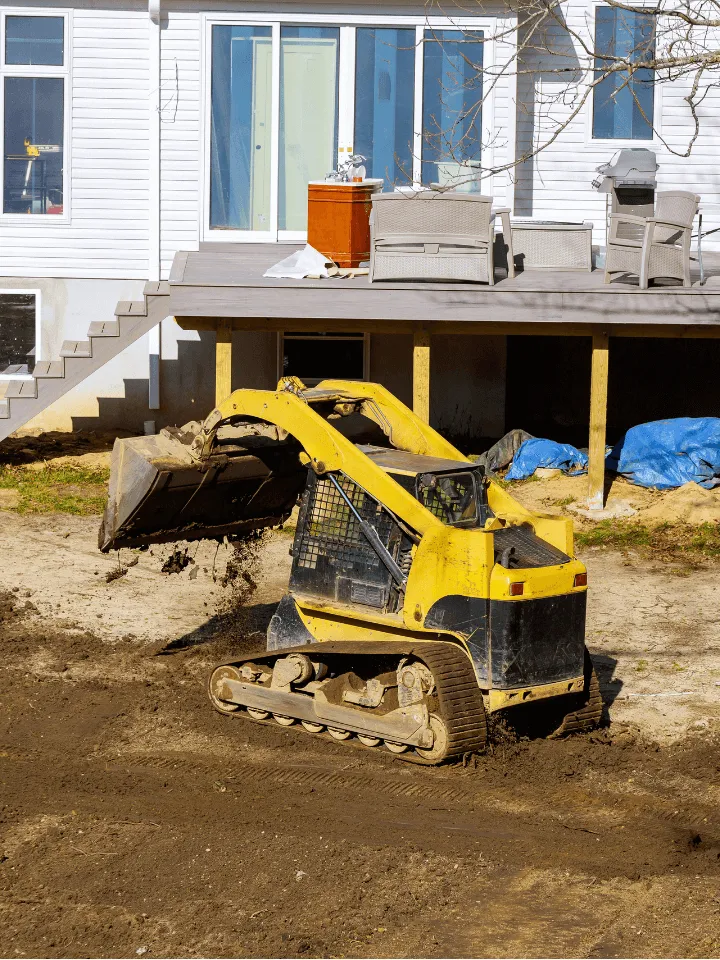
Then comes the grading itself. If your yard has a negative slope, fill dirt gets added to build up the area around your foundation. This creates the downward slope that sends water away from the house. The key is using dense, well-draining soil—not sand, which can make drainage worse, and not heavy clay, which holds water.

As soil gets added, it’s compacted in layers. Loose soil will settle over time, which defeats the purpose. We use tamping equipment to compress the dirt and create a stable base that won’t shift with the seasons.

After rough grading is complete, a layer of topsoil goes on top. This is what gets seeded or sodded to restore your lawn. The topsoil layer should be smooth and follow the same slope as the fill dirt beneath it.

Finally, the system gets tested. The best way is to wait for a rainstorm and watch where the water goes. Does it flow away from the foundation? Does it pool anywhere new? If the grading was done correctly, water should move off your property without collecting near the house.

One thing to keep in mind: regrading often works best when combined with other LI yard drainage solutions. If your yard has limited space or if water is coming from multiple directions, you might also benefit from French drains, catch basins, or downspout extensions to handle the volume.

When Foundation Grading Needs Additional Drainage Systems

Sometimes a negative slope is just one piece of a larger drainage puzzle. You might have gutters that dump water too close to the foundation. You might have a neighbor’s yard that slopes toward yours. You might have clay soil that doesn’t absorb water no matter how well you grade.

That’s when comprehensive drainage solutions become necessary. French drains, for example, are perforated pipes buried underground that collect and redirect water away from your foundation. They’re especially useful on Long Island properties where space is tight or where the natural flow of water makes regrading difficult on its own.

A French drain creates a channel for water to follow. You dig a trench that slopes away from your house, line it with gravel, and install a perforated pipe that carries water to a safe discharge point—usually a dry well, storm drain, or low area of your property. The gravel allows water to seep into the pipe while filtering out debris that could cause clogs.

Catch basins offer another option. These are grated drains installed at low points in your yard to capture surface water before it reaches your foundation. They connect to underground pipes that carry the water away. You’ll often see catch basins near driveways, patios, or anywhere water tends to collect.

Downspout extensions are simpler but just as critical. If your gutters are dumping water within a few feet of your foundation, you’re undoing the work you did with grading. Extensions move that water at least 6 to 10 feet away from the house, giving it a chance to disperse before it soaks into the ground near your foundation.

In some cases, addressing the soil itself helps. If you’ve got heavy clay contributing to poor drainage, amending the soil with sand or installing a drainage mat below the surface can help water move through instead of pooling on top.

The key is thinking holistically. Landscape grading in Nassau County, NY is often the foundation of a good drainage system, but it’s rarely the only solution. We understand Long Island’s soil, weather, and typical lot configurations, and we design systems that address your specific challenges without creating new problems for your neighbors or your landscaping.

Proper grading protects more than just your foundation. It prevents erosion that can ruin your lawn, damage walkways, and wash away the investment you’ve made in landscaping. It reduces the risk of mold and mildew in your basement. It even cuts down on pests like mosquitoes that breed in standing water.

Foundation Protection Starts with Proper Yard Grading

Water damage doesn’t announce itself with a flood. It starts small—a damp spot in the basement, a crack in the foundation, a puddle that won’t go away. But left unchecked, those small signs turn into expensive problems that cost thousands to fix.

Foundation grading is one of the most effective ways to stop water before it becomes a crisis. By ensuring your yard slopes away from your house, you’re giving stormwater a path that doesn’t involve your foundation, your basement, or your peace of mind.

If you’re seeing water pooling near your home in Nassau County, NY or Suffolk County, NY, soggy areas that won’t dry, or signs of foundation stress, don’t wait for the next storm to make it worse. At Diamond Masonry & Waterproofing, we’ve spent over 25 years protecting Long Island homes from water damage with solutions that address the root cause—not just the symptoms. We understand the unique challenges of local properties and know how to design grading and drainage systems built to last.

Your home’s foundation is too important to leave to chance. Get it looked at, get it fixed, and get back to not worrying every time the forecast calls for rain.