Interior Waterproofing
 Exterior Waterproofing
 Masonry
 Other services
How French Drain Systems Work in Sandy Soil Conditions
French drain systems excel in Nassau County's unique sandy glacial soil, efficiently channeling groundwater away from foundations through natural permeability and gravity-driven flow.
Share:

Summary:
If you’re dealing with basement moisture in Nassau County, you’ve probably heard about French drains. But here’s what most contractors won’t tell you upfront: the sandy glacial soil under your home isn’t a problem to overcome—it’s actually an advantage. Long Island’s soil composition, formed from ancient glacial deposits, creates conditions where French drain systems can perform exceptionally well when designed correctly. You’re not fighting your soil; you’re working with it. This guide breaks down how French drain components function in sandy conditions, what design principles matter most, and why understanding your local soil makes all the difference between a system that works for decades and one that fails within years.
French Drain System Components and Design Principles
A French drain system isn’t just a pipe in the ground. It’s a carefully engineered drainage solution built from three core components working together: a perforated pipe, aggregate material, and filter fabric. The perforated pipe, typically 4-inch diameter PVC, serves as the collection and transport channel for groundwater. The aggregate—usually gravel or construction sand—creates the permeable zone where water can flow freely into the pipe. Filter fabric wraps the system to prevent fine soil particles from migrating into the aggregate and clogging the drainage path.
What separates a functional system from one that fails comes down to proper design. Slope matters more than most homeowners realize. Your French drain needs at least a 1% grade, meaning one foot of drop for every 100 feet of length. Without adequate slope, water won’t flow efficiently, and you’ll end up with standing water in the pipe itself.
The diameter of your pipe determines capacity. Four-inch pipe handles most residential applications in Nassau County, but properties with heavy water issues or larger collection areas may need six-inch pipe to manage volume during heavy rains.
How Perforated Pipe and Aggregate Work Together
The perforated pipe at the heart of your French drain system does more than just carry water away. Those perforations—small holes or slits along the pipe—allow groundwater to enter from all directions. In sandy soil conditions common across Nassau County, water moves through the ground quickly. When it encounters the gravel bed surrounding your perforated pipe, it finds the path of least resistance and flows into the pipe through those perforations.
Here’s where Long Island’s glacial sandy soil becomes an advantage. Sandy soil drains water at rates up to 60 inches per hour or more. Compare that to clay soil, which might drain less than an inch per hour, and you can see why French drains perform so well here. The water doesn’t pool around your foundation because the sand naturally moves it toward your drainage system.
The aggregate material creates what engineers call the “drainage envelope.” This zone of gravel or construction sand provides even more permeability than the surrounding soil. Water flows through this envelope easily, then enters the pipe and gets transported away from your foundation. The size of your aggregate matters. Three-quarter inch crushed stone is standard, but some installations in sandy conditions use construction sand, which can actually outperform gravel in certain applications.
Filter fabric serves a critical but often overlooked function. It wraps around your aggregate layer and prevents fine soil particles from washing into the gravel bed. Over time, without filter fabric, those particles fill the spaces between your gravel, reducing permeability and eventually clogging the system. Non-woven geotextile fabric in the 4 to 6 ounce weight range provides the right balance—it allows water through while blocking soil migration.
The relationship between these components creates what drainage professionals call the “burrito drain” effect. Everything wraps together in layers: pipe in the center, surrounded by aggregate, all wrapped in filter fabric. Nothing gets in except water, and that water has a clear path out.
Why Slope and Depth Determine Long-Term Performance
Slope isn’t negotiable in French drain design. Water moves by gravity, and without adequate slope, you’re asking physics to work in your favor without giving it the tools to do so. The minimum slope of 1% means that over a 100-foot run, your pipe needs to drop at least 12 inches from start to finish. We actually recommend steeper slopes when possible—some suggest one inch of drop for every eight feet of length, which works out to about 1.25% grade.
When slope is insufficient, water doesn’t flow continuously through your system. Instead, it sits in the pipe, which creates several problems. Sediment settles in low spots. In winter, standing water can freeze and damage the pipe. And most importantly, a pipe that’s partially full of standing water can’t accept new water as efficiently during the next rain event.
Depth affects how well your system intercepts groundwater before it reaches your basement. For exterior French drains installed around your foundation, the pipe typically sits at footing level—often eight to ten feet below the surface. This placement allows the system to relieve hydrostatic pressure at the source, right where water would otherwise push against your foundation walls.
Interior French drains, installed inside your basement perimeter, typically run 18 to 24 inches deep. They’re trenched into your basement floor along the walls, creating a collection point for any water that makes it through the foundation. The water flows into the perforated pipe, then gets directed to a sump pump that removes it from your home.
The depth decision also depends on your water table. Long Island has areas with high water tables, where groundwater sits relatively close to the surface. In these locations, your French drain needs to be positioned below the typical water table level to effectively manage hydrostatic pressure. A system installed too shallow won’t intercept the water causing your problems.
Consistency in depth matters as much as the depth itself. A trench that varies in depth creates high and low spots where water can pool instead of flowing smoothly toward the discharge point. Professional installation includes careful grading of the trench bottom before the pipe goes in, ensuring that continuous slope from start to finish.
How French Drain Systems Work in Long Island Soil Conditions
Nassau County sits on glacial deposits left behind roughly 22,000 years ago during the Wisconsin Glacial Episode. The Harbor Hill moraine and the glacial outwash plains created the foundation of Long Island’s landscape. What that means for your basement: you’re dealing with soil that’s primarily sandy loam, gravel, and stratified sand deposits. The most common soil type in Nassau County is Hempstead loam, which has excellent natural drainage characteristics.
This glacial heritage creates nearly ideal conditions for French drain performance. Sandy soils are permeable by nature. Water doesn’t sit on the surface or saturate the ground the way it does in clay-heavy regions. Instead, it percolates downward through the soil, following the path of least resistance. When you install a French drain in these conditions, you’re creating that path of least resistance—a gravel-filled trench with a pipe that offers easier flow than the surrounding soil.
The high permeability of Long Island’s sandy soil means water reaches your French drain quickly. In clay soil regions, contractors sometimes struggle with water that moves so slowly through the ground that French drains can’t intercept it effectively. That’s not your problem here. Your challenge is managing water that moves readily through the soil and can build up hydrostatic pressure against your foundation if you don’t give it somewhere else to go.

Sandy Soil Drainage Rates and What They Mean for Your System
Construction sand, the type recommended for French drain installations in some soil conditions, can drain water at rates exceeding 60 inches per hour. Long Island’s natural sandy loam drains almost as quickly. To put that in perspective, ideal drainage for most landscaping applications ranges from one to three inches per hour. Your soil drains roughly 20 to 60 times faster than that ideal range.
This rapid drainage creates both advantages and considerations for French drain design. The advantage: water doesn’t pool around your foundation for extended periods. It moves through the soil quickly, which means your French drain can intercept it and direct it away before hydrostatic pressure builds to damaging levels. Heavy rainstorms that would create serious problems in clay soil regions are handled much more efficiently here.
The consideration: because water moves so freely through sandy soil, your French drain needs adequate capacity to handle the volume. A 4-inch pipe might be sufficient for a home in clay soil where water trickles slowly into the system. In sandy soil, that same pipe might need to handle a much higher flow rate during storms. This is why professional assessment of your specific property matters—we need to calculate the drainage area, estimate the volume of water that will reach the system during peak conditions, and size the pipe accordingly.
Sandy soil also affects how deep your French drain needs to be installed. Because water percolates downward readily, you don’t necessarily need to install the drain as deep as you would in less permeable soil. Exterior French drains around foundations still need to reach footing level to manage hydrostatic pressure effectively, but yard drainage systems can often be installed at shallower depths and still intercept water before it becomes a problem.
The rapid permeability of sandy soil means your filter fabric choice becomes more critical. Water moving quickly through the soil can carry fine particles with it. Without proper filter fabric, those particles migrate into your gravel bed and eventually reduce the system’s effectiveness. Non-woven geotextile fabric specifically designed for drainage applications provides the right pore size to block soil particles while allowing water to pass through freely.
One unique aspect of working with sandy soil: the trench walls tend to be less stable during installation than they would be in clay or loam. Sand doesn’t hold its shape the way clay does. We account for this by working in sections, installing the pipe and backfilling before moving to the next section, rather than excavating the entire trench at once.
Interior vs. Exterior French Drains in Nassau County Conditions
The choice between interior and exterior French drain installation isn’t just about cost, though that’s certainly a factor. It’s about where the water needs to be intercepted and what makes sense for your specific property conditions. In Nassau County’s sandy soil, both approaches can work effectively, but they serve slightly different purposes.
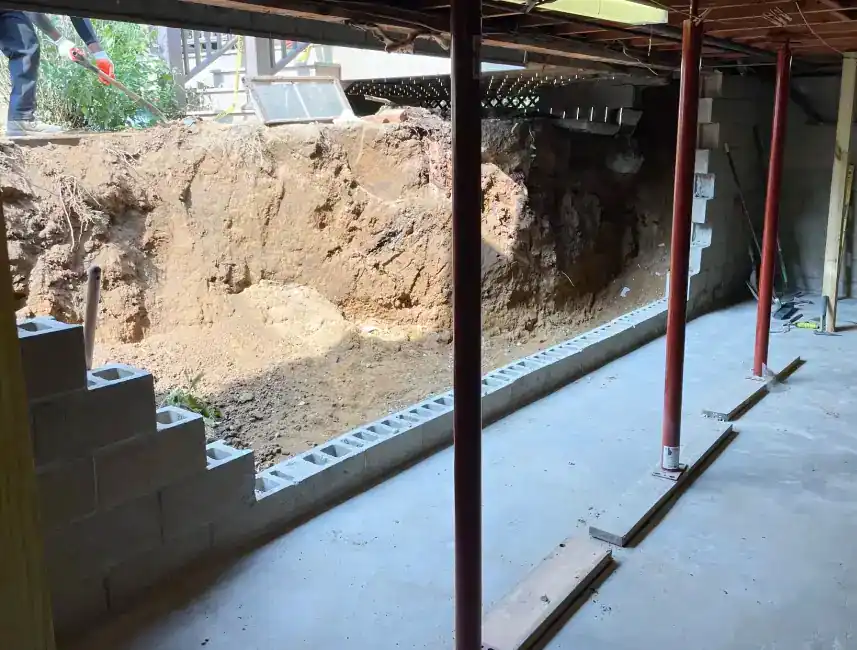
Exterior French drains get installed around the outside perimeter of your foundation at footing level. This means excavating down eight to ten feet in most cases, exposing your foundation walls, and installing the perforated pipe in a gravel-filled trench at the base of the foundation. The system intercepts groundwater before it ever reaches your foundation walls, relieving hydrostatic pressure at the source. In sandy soil conditions, this works exceptionally well because water moves freely through the ground and readily enters the drainage system.
The challenge with exterior installation in existing homes comes down to disruption. You’re digging around your entire foundation perimeter, which means removing landscaping, possibly relocating utilities, and dealing with driveways, walkways, or other hardscaping that might be in the way. The cost reflects this complexity—exterior systems typically run higher than interior installations because of the excavation work involved.
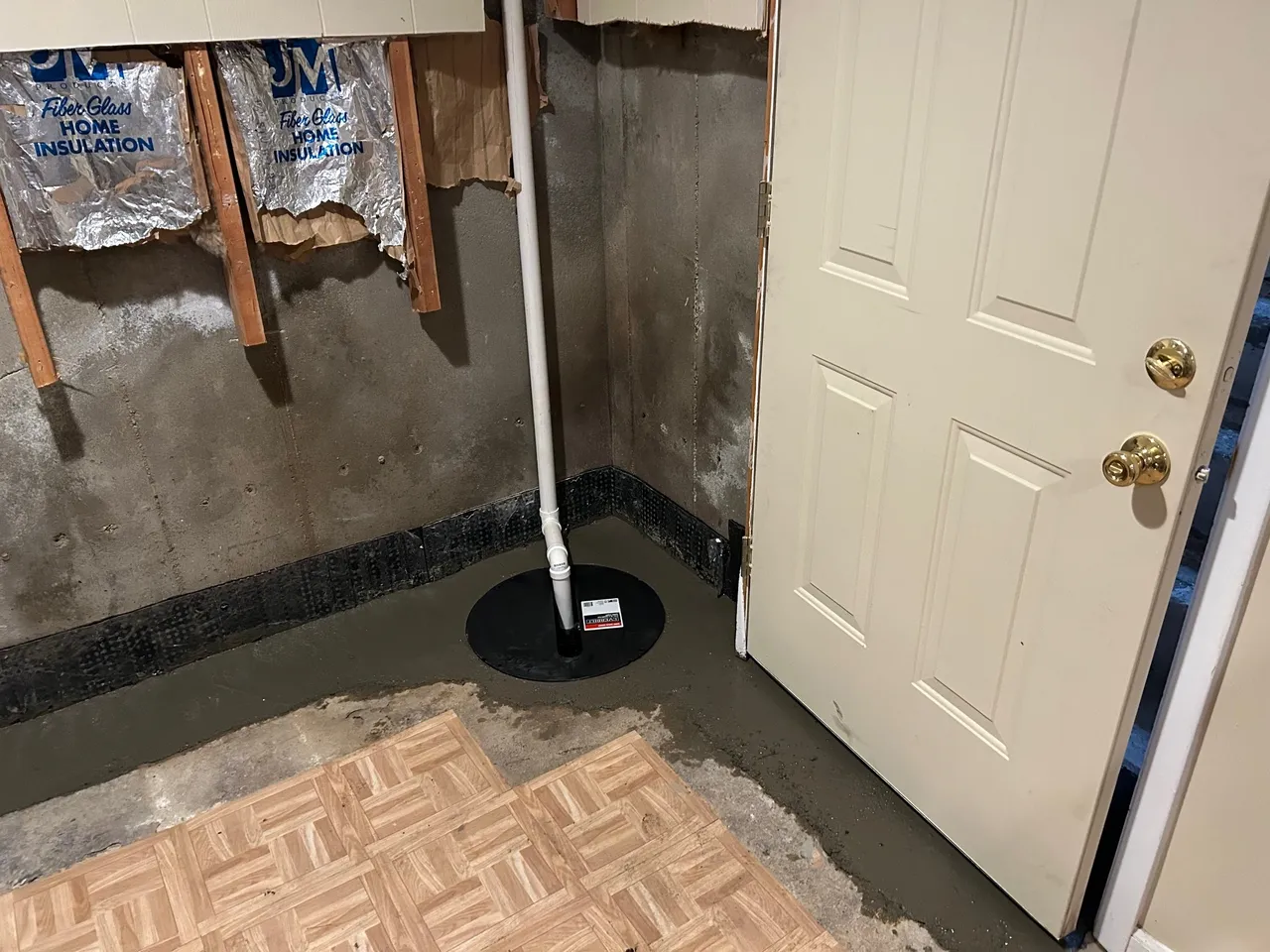
Interior French drains take a different approach. They’re installed inside your basement, along the perimeter of the foundation walls. A trench gets cut into your basement floor, typically 12 inches wide and 18 to 24 inches deep. The perforated pipe goes into this trench, surrounded by gravel and covered with new concrete. Any water that makes it through your foundation walls or up through the floor gets intercepted by this interior system and directed to a sump pump, which then pumps it outside and away from your home.
In Nassau County’s sandy soil conditions, interior French drains offer several advantages. First, they cost roughly half what exterior systems cost because the excavation work is simpler and doesn’t require digging around the outside of your home. Second, they’re protected from the elements—no exposure to freeze-thaw cycles, no risk of root intrusion from trees, no concerns about soil settling around the pipe. Third, maintenance is easier because you can access the system from inside your basement if issues ever arise.
Interior systems work particularly well in Long Island’s glacial soil because that sandy soil allows water to move through the foundation relatively easily. Rather than trying to stop water from reaching your foundation—which is nearly impossible in high water table conditions—the interior drain accepts that some water will get through and captures it before it becomes a problem in your basement.
The integration with sump pump systems is seamless. The interior French drain collects water and directs it to a sump pit, where a sump pump automatically removes it whenever the water level rises. This creates a fully automated system that works 24/7 without any action required from you. During heavy rains, the system handles the increased volume by pumping more frequently.
Some properties benefit from both interior and exterior French drains working together. The exterior system handles the bulk of groundwater before it reaches the foundation, reducing hydrostatic pressure. The interior system serves as a backup, catching anything that makes it through. For homes in areas with particularly high water tables or those that have experienced serious water intrusion problems, this dual approach provides the highest level of protection.
The soil conditions in Nassau County make both approaches viable. Sandy soil doesn’t create the drainage challenges that clay soil does, where water moves so slowly that even well-designed systems struggle to keep up. Your French drain—whether interior or exterior—can intercept and redirect water efficiently because the soil naturally moves water toward the drainage system rather than holding it in place.
Making French Drain Systems Work for Your Nassau County Home
Sandy glacial soil isn’t a barrier to effective basement waterproofing—it’s an asset when you design your French drain system correctly. The key is understanding how water moves through Nassau County’s unique soil conditions and creating a drainage path that works with those natural characteristics rather than fighting against them. Proper slope, adequate pipe diameter, quality filter fabric, and correct depth all contribute to a system that can protect your foundation for 25 years or more.
Whether you choose an interior system for cost-effectiveness and easier maintenance, or an exterior installation for maximum hydrostatic pressure relief, the sandy loam under your home will support efficient drainage when the system is properly designed and installed. The difference between a French drain that works and one that fails often comes down to understanding these local soil conditions and building the system accordingly.
If you’re dealing with basement moisture or foundation water issues, we have the experience with Nassau County’s specific soil conditions to design a French drain system that actually works. Over 25 years and 500+ completed projects have taught us exactly how to work with Long Island’s glacial soil to keep your basement dry.
Article details:
- Published by:
- Diamond Masonry & Waterproofing
- Published to:
- Last modified:
- June 8, 2026
Share:
Continue learning: