Radon & Moisture: The Hidden Connection in Suffolk County

Summary:

Your basement’s concrete foundation is more porous than you think. Those microscopic pores don’t just allow water vapor to enter—they’re also pathways for radon gas, a colorless, odorless radioactive gas linked to serious health risks. This guide explains the scientific connection between basement moisture and radon entry in Nassau and Suffolk County homes. You’ll learn how the same waterproofing systems that keep your basement dry also create gas-tight barriers against radon infiltration.
Table of contents
Your basement floor looks solid. The concrete seems impenetrable. But beneath that surface lies a network of microscopic pores—thousands of them—acting as invisible highways for both moisture and radon gas. Most Long Island homeowners focus on keeping water out, never realizing they’re also dealing with a hidden gas that the EPA considers a serious health threat. The good news? The same waterproofing approach that protects against moisture also creates a barrier against radon. Understanding this connection matters because it means one comprehensive solution can address both problems at once.

How Porous Concrete Allows Both Water Vapor and Radon Gas Entry

Concrete isn’t the impenetrable barrier most people imagine. When concrete cures, excess water evaporates and leaves behind a network of capillary pores throughout the material. These pores can make up nearly 18% of the concrete’s total volume.

The problem is scale. These pores are thousands of times larger than individual water molecules or radon atoms. That means both water vapor and radon gas move through concrete with relative ease, especially when there’s pressure from the soil pushing them upward into your basement.

This is why you can have a basement that looks completely dry on the surface but still registers high humidity levels or elevated radon concentrations. The moisture and gas are entering through the concrete itself, not just through visible cracks or gaps.

Understanding Radon Gas and Why It Matters in Long Island Basements

Radon is a naturally occurring radioactive gas that forms when uranium in soil and rock breaks down. It’s colorless, odorless, and completely undetectable without proper testing equipment. That invisibility makes it particularly dangerous.

The EPA identifies radon as the second leading cause of lung cancer in the United States and the leading cause among non-smokers. When radon accumulates in enclosed spaces like basements, prolonged exposure increases health risks significantly. While Long Island generally has lower radon levels compared to other parts of New York State, the risk isn’t zero. Statewide, roughly 18% of homes test above the EPA’s action level of 4 picocuries per liter.

What makes basements particularly vulnerable is their direct contact with soil. Radon moves upward from the ground, and basements provide the first point of entry into your home. The same pathways that allow groundwater and moisture vapor to enter—porous concrete, foundation cracks, gaps around pipes, floor-wall joints—also welcome radon gas.

Long Island’s unique geology adds another layer to this issue. Areas built on sandy soil near the coast allow gases to move differently than neighborhoods with clay deposits inland. The water table depth, soil composition, and even how your home was originally constructed all influence both moisture problems and radon entry potential.

The connection between moisture and radon isn’t coincidental. Both follow the same physics. Soil gas naturally moves from areas of higher pressure (the ground) to areas of lower pressure (your basement). When your basement has moisture issues, it’s often a sign that soil gas is also entering. That soil gas carries radon along with water vapor.

The Science Behind Soil Gas Migration Through Foundation Walls and Floors

Soil gas doesn’t just sit still underground. It’s constantly moving, driven by pressure differences, temperature variations, and the natural permeability of soil. Your basement creates a low-pressure zone compared to the soil around it, especially when HVAC systems are running or when there’s a temperature difference between inside and outside.

This pressure differential acts like a vacuum, pulling soil gas upward through any available pathway. The porous structure of concrete provides countless routes. Even in concrete that appears intact and crack-free, radon atoms and water molecules can move through the capillary network.

The dominant transport mechanism for radon through intact concrete is called concentration-driven diffusion. Essentially, radon moves from areas where it’s concentrated (in the soil) to areas where it’s less concentrated (inside your basement). The more porous the concrete, the faster this movement occurs.

Foundation cracks and gaps accelerate the problem. A hairline crack might seem insignificant, but it creates a direct channel for soil gas to enter. The same is true for gaps around utility penetrations, the joint where your basement floor meets the wall, and any areas where concrete has deteriorated over time.

Long Island’s varying soil conditions influence how quickly soil gas moves. Sandy soils are highly permeable, allowing gases to move freely through the ground and accumulate around foundations. Clay soils hold moisture longer and can create different pressure patterns that still result in soil gas entry, just through different mechanisms.

Water in the soil also plays a role. When soil becomes saturated after heavy rain or snowmelt, it can actually push soil gas upward more aggressively. This is why some homeowners notice stronger musty odors or increased basement humidity after storms—the same conditions that drive moisture into your basement are also driving radon and other soil gases inside.

The seasonal variation matters too. Winter conditions in Nassau and Suffolk Counties can increase the stack effect in your home, where warm air rises and escapes through upper levels, creating even more negative pressure in the basement. This enhanced vacuum pulls more soil gas through the foundation.

Understanding this science matters because it reveals why surface-level solutions often fail. Painting over concrete with waterproof coatings or applying standard sealants doesn’t address the internal pore structure. The gas and moisture simply find their way around or through these surface treatments.

How Basement Waterproofing Creates a Gas-Tight Barrier

When waterproofing is done correctly, it doesn’t just block liquid water—it also creates a barrier against soil gases including radon. The key is understanding that comprehensive waterproofing addresses the same pathways that allow both moisture and gas to enter.

A proper waterproofing system starts with sealing visible cracks and gaps in your foundation. These are the most obvious entry points for both water and radon. Professional crack repair uses materials specifically designed to create flexible, permanent seals that accommodate the natural movement of concrete.

But sealing visible damage is only part of the solution. The porous nature of concrete itself needs to be addressed. This is where the concept of a gas-tight barrier becomes important.

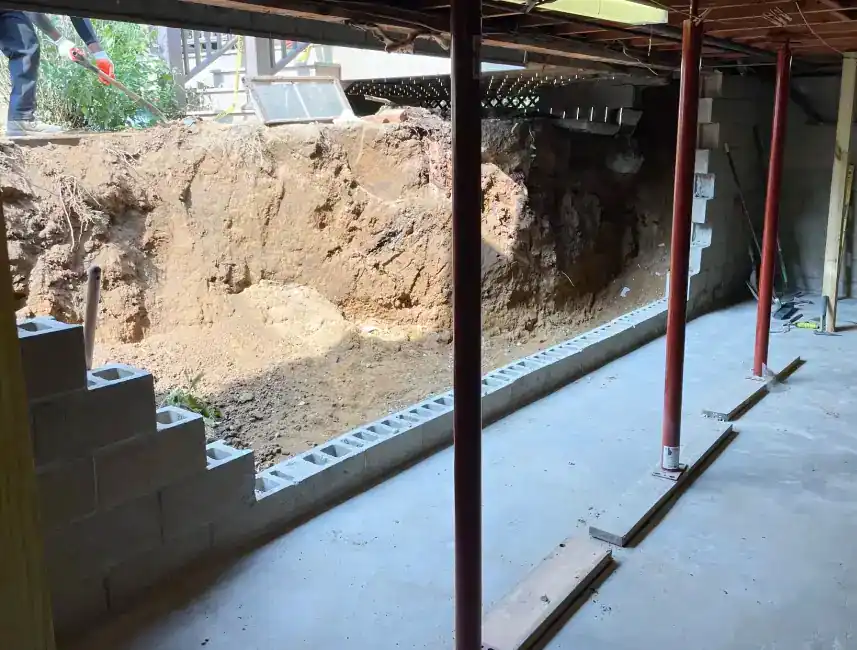
Expert installation of a brick wall drainage system in Suffolk County, NY, ensuring effective water management and structural protection for residential properties

Sealing Concrete Floors and Walls to Block Gas and Moisture Transmission

Creating a gas-tight barrier in existing basements involves treating the concrete itself to reduce its permeability. Deep-penetrating sealers work by chemically reacting with the concrete’s internal structure, filling the capillary pores and blocking the pathways that allow moisture vapor and radon to pass through.

These products penetrate several inches into the concrete, not just coating the surface. They react with the lime and alkalis naturally present in concrete, expanding inside the pores and creating a permanent seal. This internal sealing is what makes the difference between a temporary fix and lasting protection.

The application process matters. The concrete needs to be clean and properly prepared. The sealer must be applied in the right conditions and given adequate time to cure. When done correctly, this treatment significantly reduces vapor transmission rates and creates a barrier that radon atoms cannot easily penetrate.

For floors, this often means treating the entire basement slab. For walls, it means addressing both poured concrete and concrete block foundations, which have different porosity characteristics. Block walls are particularly porous and may require additional treatment to achieve a proper seal.

Vapor barriers play a role in new construction or major renovations. Heavy-duty polyethylene sheeting installed beneath concrete slabs during construction can block soil gas before it reaches the concrete. However, these barriers can deteriorate over time or may have been punctured during installation. In existing homes, treating the concrete from the interior provides the most practical solution.

The concept of creating a gas-tight barrier extends beyond just the floor and walls. Every penetration through the foundation—pipes, utility lines, sump pump openings—needs attention. Even small gaps around these penetrations can allow significant soil gas entry. Professional waterproofing addresses these details systematically.

Interior drainage systems also contribute to soil gas management. French drains installed along the basement perimeter do more than just channel water away. They also reduce soil gas pressure beneath the slab by providing a pathway for gases to vent into the drainage system rather than forcing their way through the concrete.

Soil Gas Mitigation and Radon Reduction Through Waterproofing Systems

The same French drain and sump pump systems used for basement waterproofing can be adapted for active soil gas mitigation. This is where waterproofing and radon reduction strategies overlap most directly.

Active soil depressurization systems work by creating negative pressure beneath your basement floor, pulling soil gas out before it can enter your living space. A perforated pipe is installed in the gravel layer beneath the slab or connected to the perimeter drain system. A fan draws air from beneath the foundation and vents it safely outside, above the roofline.

This approach addresses radon at its source. Instead of trying to seal every possible entry point, the system intercepts soil gas in the ground and redirects it. When combined with proper sealing of the concrete and foundation cracks, the reduction in radon levels can be dramatic—often 50% to 99% depending on the system design and home construction.

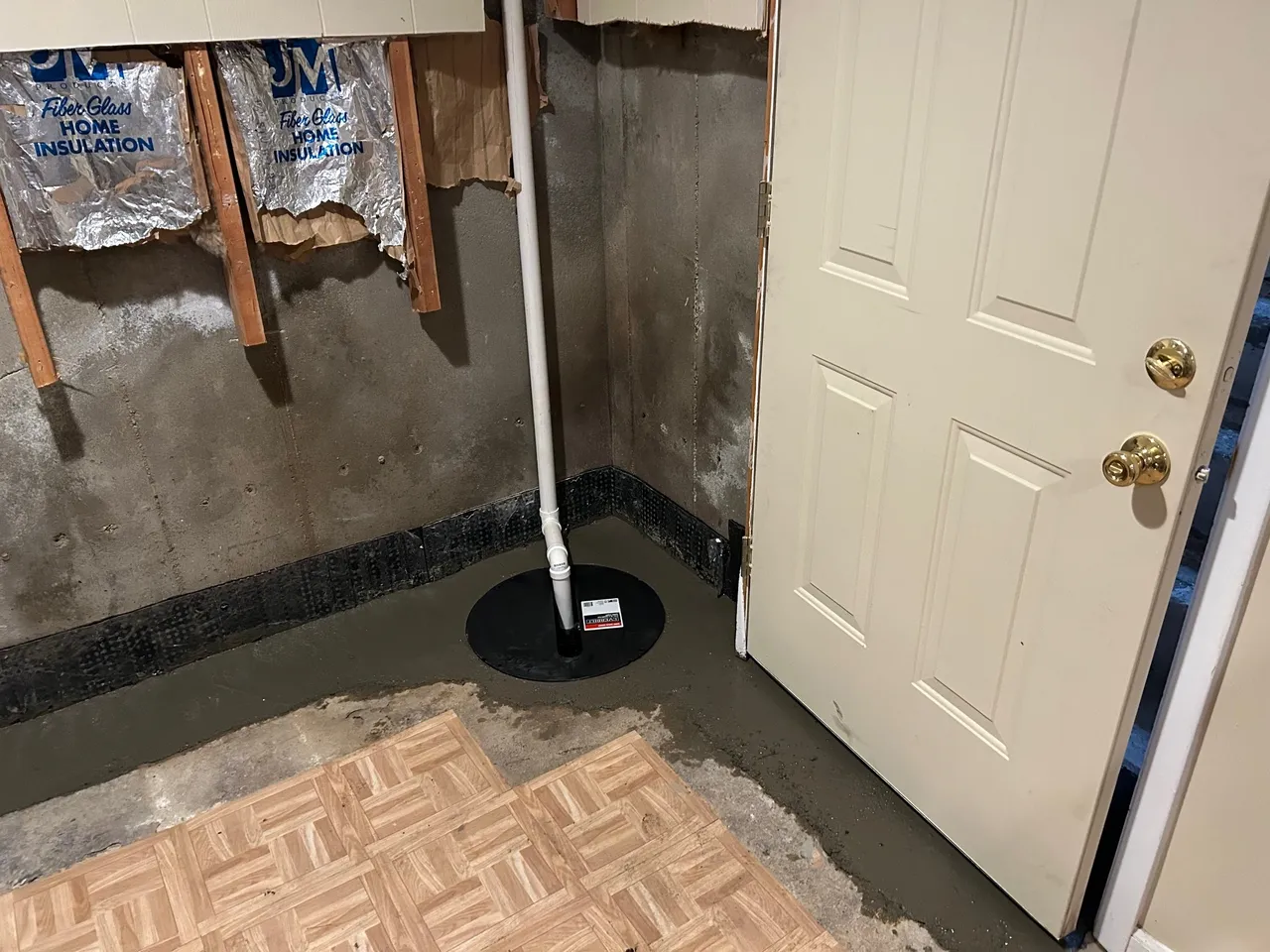
For Long Island homes, this integrated approach makes particular sense. The same excavation and installation work required for interior waterproofing can accommodate soil gas mitigation components. The sump basin that houses your sump pump can be sealed and connected to a vent pipe. The perimeter drainage system becomes part of the soil gas collection network.

The science is straightforward. By reducing the pressure beneath your slab, you eliminate the driving force that pushes radon and moisture into your basement. The sealed concrete and properly addressed cracks ensure that any remaining soil gas has minimal pathways to enter.

Passive systems offer another option, particularly for new construction or homes undergoing major renovation. These systems use the same basic components—gravel layer, vapor barrier, vent pipe—but rely on natural air pressure differences rather than a fan to move soil gas out. If radon levels remain elevated, a fan can be added later to convert the passive system to active.

The effectiveness of these systems has been well-documented. Homes with properly installed soil gas mitigation systems consistently achieve radon levels well below the EPA action guideline. The systems require minimal maintenance—typically just an annual check to ensure the fan is operating correctly.

For homeowners concerned about both water intrusion and radon exposure, this integrated approach delivers comprehensive protection. You’re not paying for two separate systems or two separate contractors. The waterproofing work addresses moisture while simultaneously creating the foundation for radon control.

Protecting Your Nassau or Suffolk County Home From Both Moisture and Radon

The connection between basement moisture and radon entry isn’t just theoretical—it’s based on the fundamental physics of how soil gas moves through porous concrete. When you address one problem, you’re often addressing both, as long as the work is done comprehensively.

For Long Island homeowners, this means thinking beyond just keeping water out. It means understanding that your basement’s concrete foundation allows both moisture vapor and radon gas to enter through the same microscopic pathways. It means recognizing that proper waterproofing creates a gas-tight barrier that protects your family’s health while keeping your basement dry.

If you’re dealing with musty odors, visible moisture, or simply want to ensure your home is protected from both water damage and radon exposure, we can help. With over 25 years of experience serving Nassau and Suffolk Counties, we understand the unique challenges Long Island homes face and provide comprehensive solutions that address both moisture and soil gas entry.