
 Interior Waterproofing
 Exterior Waterproofing
 Masonry
 Other services
Summary:
Why Basement Waterproofing Must Come Before Finishing
Walk into any basement remodeling disaster and you’ll see the same story. Someone spent $15,000, $25,000, sometimes $40,000 turning their basement into something beautiful. Then the first heavy rain hits. Or summer humidity settles in. Water finds the path it was always going to find.
Drywall bubbles and warps. Carpet develops dark spots that smell like mildew within weeks. Wood framing starts to rot behind the walls where you can’t see it until the damage is structural. All that money, all that planning—gone because waterproofing wasn’t handled first.
Long Island’s climate doesn’t give you the option to skip this step. Coastal humidity, varying soil conditions from town to town, seasonal freeze-thaw cycles—your basement faces moisture pressure year-round. The question isn’t whether water will try to get in. It’s whether you’ll stop it before or after you’ve invested in finishes.
How Water Damages Finished Basements in Nassau and Suffolk Counties
Long Island basements deal with moisture from multiple directions simultaneously. You’ve got exterior groundwater pressing against foundation walls, especially after heavy rain. You’ve got humidity condensing on cool concrete surfaces during summer months. Hydrostatic pressure forces water up through floor cracks and along the cove joint where walls meet floors.
The soil composition matters more than most people realize. Sandy soil near coastal areas like Long Beach behaves completely differently than the clay found in Syosset or Garden City. That clay holds water against your foundation for days after a storm, creating constant pressure. Coastal communities like Freeport face additional challenges from flooding and elevated water tables. There’s no universal solution because the problem itself varies by location.
When you finish a basement without addressing these moisture sources, you’re trapping water behind your new walls and under your new floors. Mold starts growing within 24-48 hours of water exposure. It spreads behind drywall, under carpeting, inside wall cavities—anywhere moisture accumulates in darkness.
The health implications aren’t minor. Mold exposure triggers respiratory issues, allergic reactions, asthma attacks, and chronic headaches. At least 50% of the air circulating through your home originates in the basement. A moldy basement means you’re breathing those spores upstairs too.
Structural damage compounds over time. Wood rot weakens floor joists and support beams. Foundation cracks widen under freeze-thaw pressure. What starts as a small leak becomes a major repair job because the problem was covered up instead of solved. Insurance typically won’t cover damage from long-term moisture issues—they consider it a maintenance problem you should have prevented.
The financial hit extends beyond repairs. Your home’s value drops when inspections reveal water damage or active moisture problems. Buyers walk away or demand significant price reductions. A wet basement becomes one of the biggest red flags in real estate transactions.
Interior Waterproofing Systems That Actually Work Long-Term
Real waterproofing isn’t painting sealant on your walls and calling it done. It’s a systematic approach that addresses how water enters, how it moves, and how it exits your basement before finishing work begins.
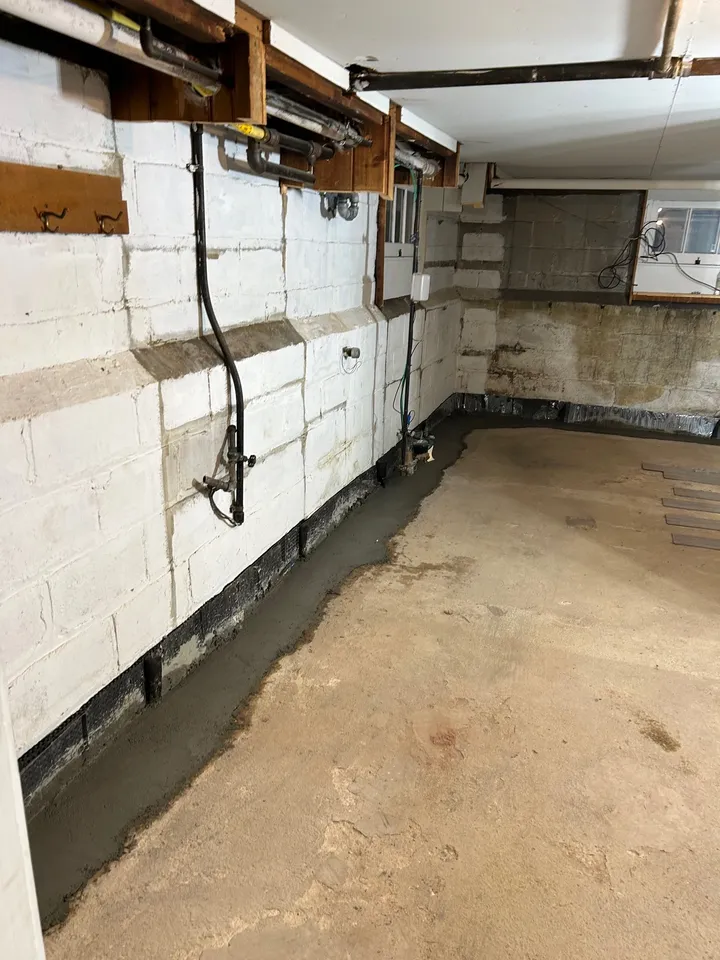
Interior drainage systems form the foundation of most effective dry basement solutions. A perimeter French drain system involves removing a strip of concrete around the basement perimeter, installing perforated pipe in a gravel bed along the footings, and connecting everything to a sump pump basin. When water enters through walls or floor joints, the system captures it and pumps it out before it reaches your living space. This is basement remodeling preparation done right.
Sump pump selection matters more than people think. A quality system includes battery backup for power outages—because storms that cause flooding also cause power failures. The discharge line needs to carry water at least 10-15 feet from your foundation, not just dump it next to your house where it seeps right back in. This isn’t where you cut corners to save a few hundred dollars.
Foundation crack repair stops water at the source. Injection methods using polyurethane or epoxy seal cracks from the inside, preventing groundwater from entering through foundation walls. This works for both poured concrete and masonry block foundations, though the approach differs based on foundation type. Small cracks become big problems fast in Long Island’s freeze-thaw climate.
Exterior waterproofing adds another layer of protection when interior systems alone won’t solve the problem. Excavating around the foundation allows application of waterproof membranes directly to exterior walls. You can address grading issues simultaneously, ensuring ground slopes away from the foundation. Proper gutter and downspout systems complete the exterior approach by managing roof runoff before it saturates soil around your foundation.
Humidity control addresses moisture that enters as vapor rather than liquid water. Dehumidification systems maintain indoor humidity below 60%—the threshold where mold growth accelerates. These aren’t the portable units you empty daily. Professional systems drain automatically and run continuously to maintain target humidity levels year-round.
The installation sequence matters. You can’t waterproof effectively after finishing work is complete. Removing finished walls and floors to install drainage systems costs more and creates bigger disruption than doing it right the first time. Every waterproofing professional will tell you the same thing: this work happens before you hang the first sheet of drywall. That’s not upselling. That’s physics.
Smart Tax Refund Home Improvements That Protect Your Investment
Tax refunds in 2026 are averaging around $2,476 according to IRS data—enough to make a meaningful dent in waterproofing costs or fund a portion of your basement finishing project. The question is how to invest that money for maximum return instead of watching it disappear into failed remodeling.
Basement waterproofing typically delivers a 30% return on investment when you sell your home. A waterproofed basement that’s then properly finished can return significantly more because you’ve added functional square footage that buyers actually want to use. Homes with dry, finished basements sell faster and command higher prices than comparable homes with damp, unusable lower levels.
The math is straightforward. Waterproofing might cost $4,000 to $8,000 depending on your basement size and the systems needed. That protects a finishing investment that could run $20,000 to $50,000 or more. Skip the waterproofing to save a few thousand now, and you risk losing the entire finishing investment when moisture destroys your work. That’s not a smart use of tax refund money.
Basement Finishing Projects That Add Real Value to Long Island Homes
Once waterproofing is handled, your basement becomes a blank canvas for adding genuine value to your home. The most popular and valuable finishing projects in 2026 focus on functional spaces that serve specific needs rather than generic “bonus rooms.”
Home offices have surged in demand as remote work becomes permanent for many professionals. A basement office offers privacy and separation from household activity. Proper soundproofing keeps noise from traveling upstairs while keeping basement work noise contained. Natural light from egress windows makes the space more inviting than a dark corner of the house. This is where your tax refund investment starts paying daily dividends.
Entertainment spaces and man caves consistently rank among top basement uses in Nassau and Suffolk Counties. These range from simple media rooms with comfortable seating and quality sound systems to full bars with custom cabinetry, game areas with pool tables or arcade setups, and multi-purpose spaces that serve as the home’s social hub. The basement’s separation from main living areas makes it ideal for activities that might be too loud or disruptive elsewhere.
Home gyms eliminate membership fees and commute time while providing private workout space. You need appropriate flooring that handles equipment weight and provides cushioning, adequate ventilation to manage humidity from workouts, and enough ceiling height for exercises. Many homeowners combine gym space with other uses since equipment typically occupies one area while leaving room for other functions.
Guest suites with bedrooms and bathrooms add serious value, especially in markets where multi-generational living is common. Building codes require egress windows for basement bedrooms—both for safety and to meet legal bedroom definitions. A full bathroom increases convenience and privacy for guests while adding functional value that appraisers recognize.
The key is choosing finishes and materials appropriate for below-grade environments. Luxury vinyl plank flooring resists moisture better than hardwood. Mold-resistant drywall and insulation prevent problems even if minor humidity fluctuations occur. These aren’t expensive upgrades—they’re smart choices that acknowledge basement conditions differ from upstairs living spaces. This is finishing a basement the right way, not the cheap way.
Warning Signs Your Basement Needs Waterproofing Before Any Remodeling
Most basements show warning signs long before obvious flooding occurs. Recognizing these early indicators saves money and prevents damage from escalating before you invest your tax refund in finishing work.
Musty odors are often the first sign homeowners notice. That smell isn’t normal and it isn’t harmless. It indicates active mold growth somewhere in your basement—on walls, under stored items, behind finished surfaces, or in areas you don’t regularly inspect. By the time you smell it, mold colonies are established and producing spores. You can’t finish over that and expect good results.
Visible mold appears as black, green, or white patches on walls, floors, or stored items. It concentrates in corners, along baseboards, and anywhere moisture accumulates. Don’t make the mistake of cleaning visible mold and considering the problem solved. Surface mold indicates moisture conditions that support growth—conditions that will produce more mold unless you address the source.
Efflorescence looks like white, chalky deposits on concrete or masonry walls. It forms when water moves through these materials, carrying dissolved salts to the surface where they crystallize as water evaporates. Those white stains are proof that water is actively moving through your foundation walls right now.
Water stains on floors or walls tell you water was present even if the surface is currently dry. Stains don’t appear and disappear—if water was there once, it will return. The pattern of staining often reveals the entry point, whether through cracks, joints, or porous concrete. Pay attention to where stains appear after heavy rain.
Foundation cracks larger than hairline width allow water entry and may indicate structural movement. Horizontal cracks or cracks wider at one end than the other warrant immediate professional assessment. Even smaller cracks can channel significant water during heavy rain or when groundwater levels rise seasonally.
High humidity creates condensation on pipes, walls, or floors during summer months. If you notice water droplets forming on cool surfaces, your basement humidity is too high. Relative humidity above 60% supports mold growth and makes the space uncomfortable. Dehumidifiers treat the symptom but don’t solve the underlying problem of moisture entering your basement.
Increased pest activity often signals moisture problems. Silverfish, centipedes, and other moisture-loving insects thrive in damp environments. Their presence indicates humidity levels that will also support mold and cause other moisture-related damage. They’re telling you something’s wrong.
Turning Tax Refund Money Into Lasting Home Value
Your tax refund represents an opportunity to invest in your home’s value and your family’s comfort. Using that money wisely means understanding which improvements create lasting value versus which ones waste money by addressing symptoms instead of causes.
Waterproofing your basement before any finishing work isn’t the exciting part of the project. It’s not what you picture when you imagine your finished space. But it’s the only way to ensure that everything you build on top of it actually lasts. Every dollar you invest in proper waterproofing protects exponentially more money invested in finishes, furnishings, and the time you’ll spend in that space.
Long Island homeowners face specific challenges that demand local expertise. The soil under your Freeport home behaves differently than what’s found in Huntington or Levittown. Coastal humidity in Long Beach creates different conditions than inland areas experience. Cookie-cutter solutions fail because the problems themselves vary by location. Working with contractors who understand these local conditions means getting solutions designed for your specific situation, not generic approaches that fail within years.
If you’re ready to finally convert that damp basement into usable square footage, start with the foundation—literally. Get a professional assessment of your basement’s current condition, understand what waterproofing systems your situation requires, and build your project timeline around doing this work first. Your finished basement will thank you by staying dry, healthy, and beautiful for decades instead of deteriorating within months. We’ve been helping Nassau and Suffolk County homeowners protect these investments for over 25 years, turning problem basements into spaces families actually use and enjoy.