
 Interior Waterproofing
 Exterior Waterproofing
 Masonry
 Other services
Summary:
How Exterior Masonry Controls Water Before It Reaches Your Foundation
The connection between exterior masonry and basement waterproofing isn’t obvious until you understand Long Island’s unique challenges. Here, water problems start with soil movement, poor drainage, and the constant pressure that saturated ground puts on your foundation walls.
Retaining walls do more than create level spaces in your yard. When properly engineered, they redirect water flow, prevent soil erosion around your foundation, and reduce the hydrostatic pressure that causes basement cracks and leaks. Foundation concrete work complements this by creating stable, properly graded surfaces that guide water away from your home’s most vulnerable points.
Retaining Wall Water Management Systems for Long Island Properties
Effective retaining wall water management starts with understanding that these structures serve dual purposes on Long Island properties. They provide structural support while functioning as sophisticated drainage systems that protect your foundation from water-related damage.
The key lies in proper drainage integration behind the wall. We install perforated drainage pipes surrounded by gravel and wrapped in filter fabric to prevent soil infiltration. This system collects water that would otherwise build up behind the wall, creating dangerous hydrostatic pressure that can cause both the retaining wall and your foundation to fail.
Long Island’s clay-rich soils are particularly problematic because they expand significantly when wet, creating extreme pressure against both retaining walls and foundation walls during wet seasons. A properly designed retaining wall system includes backfill materials that allow water to flow freely rather than accumulating behind the structure.
The grading behind retaining walls is equally critical. Water must be directed away from both the wall and your foundation through carefully planned slopes and drainage outlets. This might include connections to existing storm drains, dry wells, or daylight outlets that carry water to safe discharge points away from your property.
Smart retaining wall design also considers Long Island’s challenging weather patterns. Heavy rains from nor’easters and hurricanes can saturate slopes quickly, causing dangerous soil movement that threatens both the retaining wall’s stability and your home’s foundation. We account for these extreme conditions through proper engineering and drainage capacity.
Masonry Drainage Solutions That Prevent Foundation Problems
Masonry drainage solutions extend far beyond basic water diversion—they create integrated systems that address Long Island’s specific soil and weather challenges before foundation problems develop. The most effective approaches combine multiple masonry elements to create comprehensive protection.
Foundation grading represents the first line of defense. Properly executed concrete work ensures that water flows away from your foundation rather than pooling against basement walls. This includes strategic placement of concrete aprons, walkways, and driveways that channel water toward appropriate drainage systems rather than allowing it to seep into the soil around your foundation.
Dry wells integrated with masonry drainage systems provide essential overflow capacity during heavy rainfall events. These underground chambers collect stormwater and allow it to slowly percolate into the soil at safe distances from your foundation. When combined with proper surface grading and retaining wall drainage, dry wells prevent the water accumulation that leads to hydrostatic pressure and basement flooding.
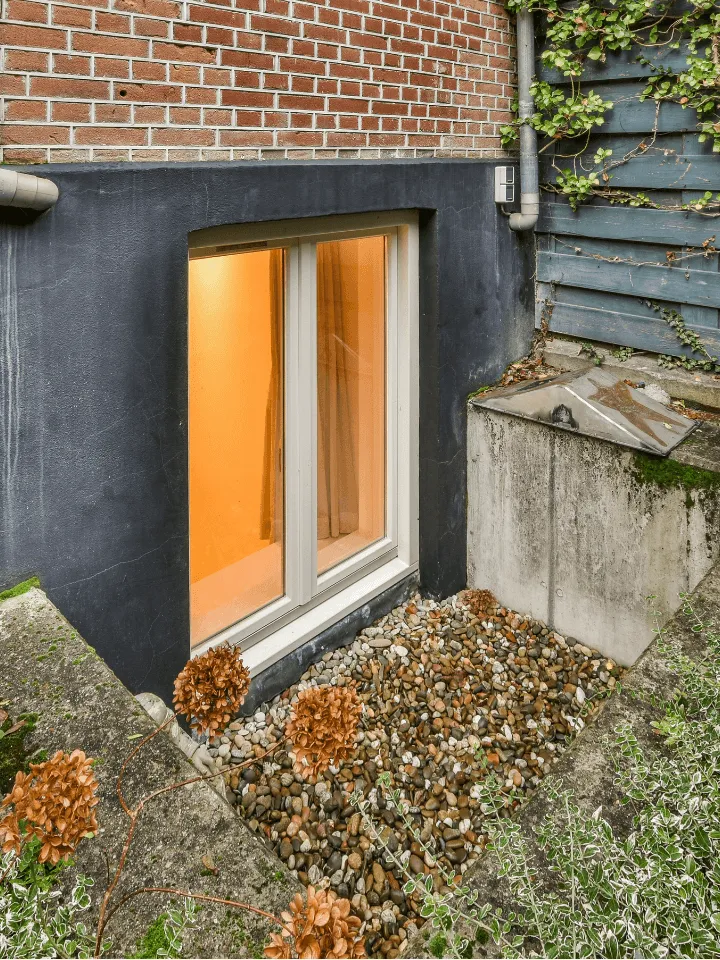
Window well drainage deserves special attention in Long Island’s challenging conditions. Properly constructed masonry window wells include integrated drainage systems that prevent water accumulation around below-grade windows—a common source of basement water infiltration. These systems typically include drainage connections to your home’s perimeter drainage system or separate discharge points.
The integration of these masonry drainage solutions creates redundant protection against water damage. When surface drainage, retaining wall drainage, and foundation grading work together, they address multiple potential failure points rather than relying on a single system to protect your basement from water infiltration.
We design masonry drainage solutions that account for Long Island’s freeze-thaw cycles, which can damage improperly designed systems. Materials and construction techniques must withstand repeated freezing and thawing while maintaining effective water management throughout seasonal changes.
Concrete Foundation Repair Long Island: Addressing Water-Related Damage
Concrete foundation repair in Long Island often reveals the critical connection between exterior masonry and basement waterproofing. Most foundation problems stem from water-related issues that could have been prevented through proper exterior drainage and soil management.
Foundation cracks typically develop when hydrostatic pressure from saturated soil exceeds the concrete’s ability to resist lateral forces. Long Island’s expansive clay soils create particularly challenging conditions, swelling when wet and creating extreme pressure against foundation walls during wet seasons.
We address both the immediate damage and the underlying water management issues that caused the problem. This comprehensive approach prevents recurring damage while restoring structural integrity.
Understanding Long Island's Soil Conditions and Foundation Challenges
Long Island’s diverse soil composition creates unique challenges that directly impact both retaining wall performance and foundation stability. Understanding these conditions helps explain why exterior masonry plays such a critical role in basement waterproofing.
Sandy soils, prevalent in coastal areas, drain quickly but lack the stability needed to support heavy loads. These soils can shift easily, particularly during storms, undermining both retaining walls and foundations. While quick drainage reduces water buildup, it can also lead to dry conditions that weaken surrounding soil and create settlement issues.
Clay soils present the opposite challenge. These fine-grained soils retain water effectively but expand significantly when wet and shrink when dry, creating constant stress on foundations. Clay’s high water retention increases hydrostatic pressure against basement walls, leading to bowing, cracking, and water infiltration problems.
Silty soils, found in Long Island’s natural drainage basins, combine challenges from both sandy and clay soils. They retain more moisture than sandy soils but drain slower, creating conditions that can increase pressure on basement walls. Silty soils also compact easily under pressure, potentially leading to uneven foundation settling.
The seasonal expansion and contraction cycle common to Long Island soils creates ongoing stress on both retaining walls and foundations. We account for this movement through proper engineering, flexible drainage systems, and construction techniques that accommodate soil movement without compromising structural integrity.
Understanding your specific soil conditions is essential for designing effective exterior masonry solutions. Professional assessment identifies soil type, drainage characteristics, and potential problem areas that must be addressed to ensure long-term performance of both retaining walls and foundation protection systems.
Retaining Wall Permit Requirements NY: Ensuring Code Compliance
Retaining wall permit requirements in New York vary significantly by municipality, but understanding these regulations is crucial for both legal compliance and effective water management. Most Nassau and Suffolk County towns require permits for retaining walls over specific heights, typically ranging from 24 inches to 4 feet.
Brookhaven, for example, requires permits for retaining walls over 2 feet tall or projects involving movement of more than 2,500 square feet of soil. The permit process typically takes about 5 days for residential projects and 10 days for commercial applications. These requirements exist not just for safety, but to ensure proper drainage and water management that protects both your property and neighboring homes.
Professional engineering becomes mandatory for taller retaining walls, typically those exceeding 4 feet in height. Engineers must provide signed and sealed calculations showing the wall is designed to prevent overturning, sliding, excessive foundation pressure, and water uplift. Retaining walls must be designed with a safety factor of 1.5 for lateral sliding and overturning.
Permit applications require detailed construction drawings that include wall location, property lines, easements, dimensions, drainage components, surface water flow direction, and erosion control details. These requirements ensure that retaining walls function as effective water management systems rather than creating drainage problems for neighboring properties.
Setback requirements dictate how close retaining walls can be to property lines, with many municipalities requiring one foot of distance for each foot of height for walls rising above the grade of public right-of-way. These setbacks help prevent drainage conflicts and ensure adequate access for maintenance.
Working with experienced professionals familiar with local permit requirements streamlines the approval process while ensuring your retaining wall meets all engineering and drainage standards. We understand how to integrate permit compliance with effective water management design, creating systems that protect your foundation while meeting all regulatory requirements.
Protecting Your Long Island Home Through Strategic Exterior Masonry
The connection between exterior masonry and basement waterproofing becomes clear when you understand that effective water management starts outside your home. Retaining walls and foundation concrete work together to create comprehensive protection systems that address Long Island’s unique soil and weather challenges before water problems reach your basement.
Strategic exterior masonry solutions prevent the hydrostatic pressure, soil erosion, and drainage problems that cause most foundation issues. By managing water flow, stabilizing soil, and creating proper drainage pathways, these systems protect your home’s structural integrity while adding functional outdoor space and property value.
Professional installation ensures that your exterior masonry serves both aesthetic and functional purposes while meeting all local permit requirements. When you’re ready to protect your Long Island home through strategic exterior masonry solutions, we bring 25+ years of experience creating integrated systems that keep basements dry and foundations stable.