Summary:
How French Drains Work in Long Island Soil
A French drain is a trench system filled with gravel and a perforated pipe that redirects water away from your foundation. It doesn’t pump anything. It relies on gravity and slope to move groundwater before it reaches your basement walls or floor.
The system works passively, meaning no electricity, no moving parts, and no maintenance schedule beyond occasional checks for clogs. Once it’s installed correctly, water flows through the gravel, into the pipe, and out to a designated drainage area—usually a dry well, storm drain, or daylight exit point away from your home.
For Long Island properties, French drains are often installed along the interior perimeter of a basement or around the exterior foundation. The choice depends on your soil, water table, and how much excavation you’re willing to handle. Interior installations are less invasive and easier to access for future maintenance.
Why Sandy Soil Changes How French Drains Perform
Long Island sits on glacial outwash plains—layers of sand and gravel deposited thousands of years ago. That sandy composition is why water moves so quickly here compared to other regions. It drains fast, which sounds good until you realize it also means water travels sideways toward your foundation just as easily.
In areas like Long Beach, Wantagh, or Seaford, sandy soil lets water flow freely. A French drain installed in this type of soil can intercept groundwater efficiently and redirect it before it ever touches your basement. The permeability works in your favor as long as the system is sloped correctly and the discharge point is far enough from the house.
But not all of Long Island is pure sand. Pockets of clay exist throughout Nassau County, NY and Suffolk County, NY, especially in areas like Syosset or parts of Huntington. Clay doesn’t drain—it holds water. When a French drain encounters clay-heavy soil, water can pool around the pipe instead of flowing through it. That’s why soil composition matters more than most homeowners realize when evaluating yard drainage systems.
The other factor is your water table. In low-lying areas near the coast or former wetlands, the water table sits just a few feet below the surface. After heavy rain or snowmelt, that groundwater rises and pushes against your foundation. A French drain can handle this if it’s deep enough and connected to a reliable discharge system. If it’s not, the water has nowhere to go and you’re back where you started.
Interior vs Exterior French Drain Installation on Long Island
You have two main options when installing a French drain: inside your basement or outside along the foundation. Both serve the same purpose, but the installation process and long-term accessibility are completely different.
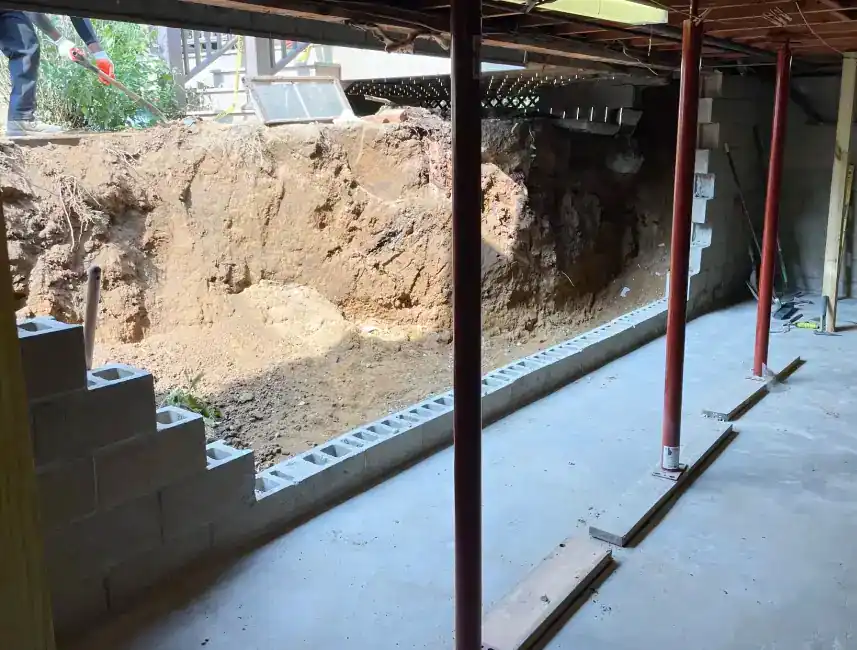
Exterior French drains are installed by excavating around the outside of your foundation, exposing the basement walls, and placing a perforated pipe in a gravel-filled trench at footing level. This method intercepts water before it ever reaches your foundation. It’s effective, but it’s also invasive. You’re digging up driveways, landscaping, and potentially dealing with underground utilities. If you have pavers, a deck, or mature trees near your foundation, the cost and disruption add up fast.
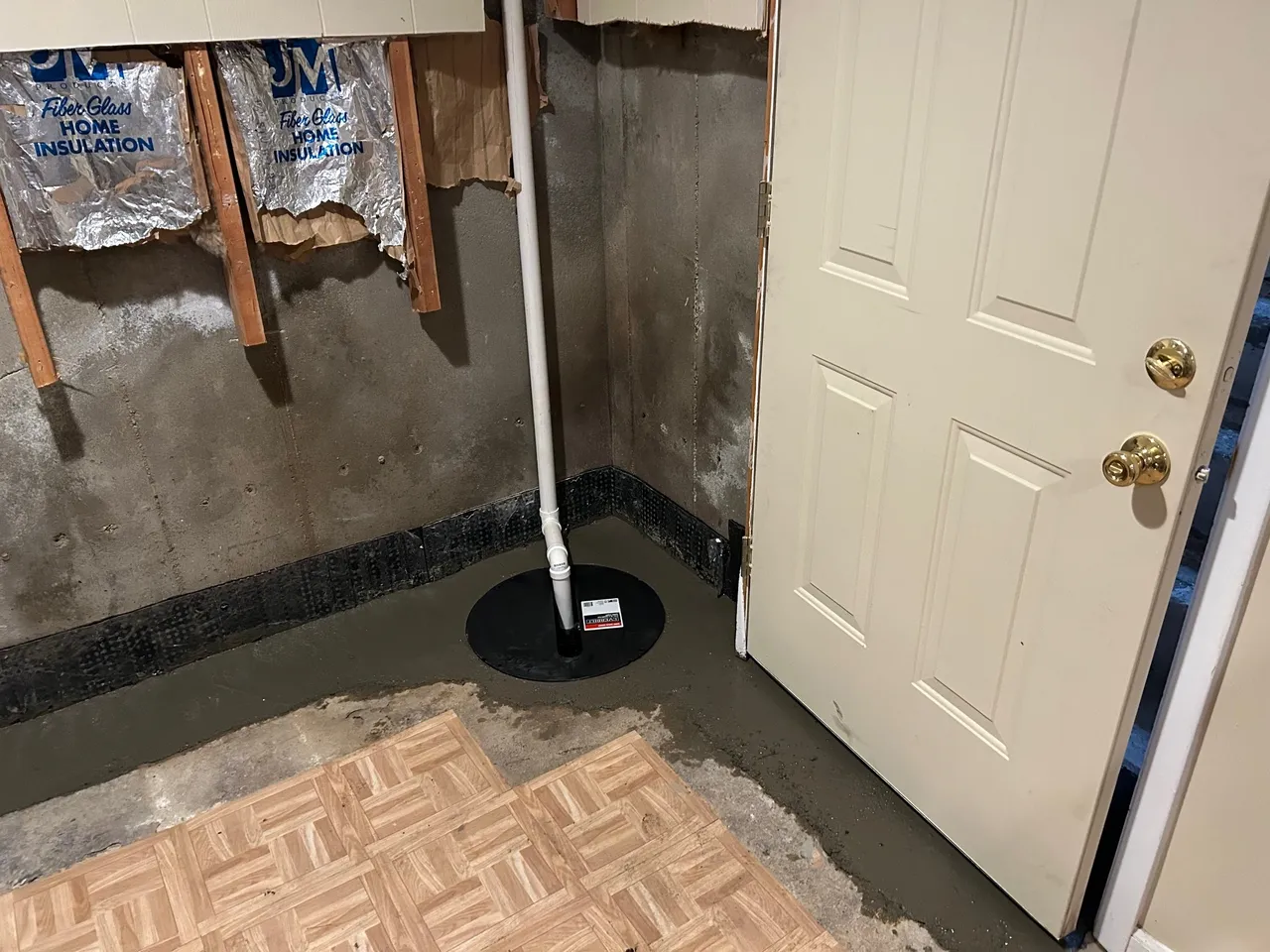
Interior French drains are installed along the perimeter of your basement floor. A trench is cut into the concrete, the pipe is laid in gravel, and the floor is re-cemented. Water that seeps through the foundation wall or up through the floor is collected and directed to a sump pump for removal. This method is less expensive, faster to install, and doesn’t disturb your yard. It also gives you easier access if maintenance is ever needed.
For most Long Island homes, interior systems make more sense. They’re designed to work with the region’s high water table and can be paired with a sump pump to handle sudden surges during nor’easters or heavy summer storms. When you’re considering French drain installation Long Island contractors recommend, interior placement often delivers better long-term value for existing homes. Exterior drains work well for new construction or homes undergoing major foundation work, but retrofitting an older home with an exterior system often isn’t practical or cost-effective.
One thing to keep in mind: French drains don’t remove water on their own. They collect and redirect it. If your basement sits below the water table or you don’t have a gravity-fed discharge option, you’ll need a sump pump to finish the job. That’s where the two systems start working together instead of competing.
How Sump Pumps Handle High Water Tables in Nassau and Suffolk Counties
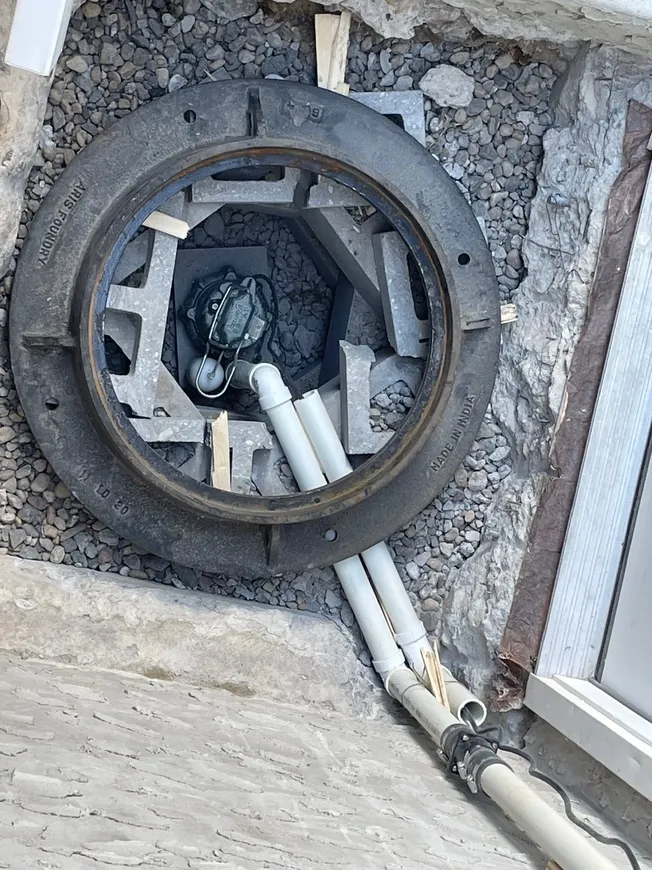
A sump pump does what a French drain can’t: it actively removes water from your basement. The pump sits in a sump pit—a basin dug into the lowest point of your basement floor. When water fills the pit to a certain level, the pump kicks on and pushes that water out through a discharge pipe, away from your foundation.
Sump pumps are electric, which means they need power to run. Most systems include a float switch that activates the pump automatically when water rises. Once the pit is emptied, the pump shuts off until the next cycle. It’s a simple, reliable process as long as the pump is sized correctly and maintained regularly.
For Long Island homes dealing with high water tables, sump pumps are often non-negotiable. In areas like Levittown, East Meadow, or Babylon, groundwater pressure can overwhelm passive drainage systems. A sump pump gives you active control, especially during storms when water volume spikes.
When a Sump Pump Works Better Than a French Drain Alone
If your basement sits below the water table, gravity won’t help you. Water needs to be lifted up and out, and that requires mechanical force. This is where sump pumps outperform French drains every time.
Homes in flood-prone areas or neighborhoods with poor surface drainage often see water intrusion during every storm. A French drain can collect that water, but if there’s no natural slope to carry it away, the system stalls. The sump pump solves that problem by actively pumping water to a discharge point—usually a storm drain, dry well, or surface area far from the foundation.
Another scenario where sump pumps shine: sudden, heavy water intrusion. Nor’easters and summer downpours can dump inches of rain in a short window. A passive French drain might not move water fast enough to keep up. A sump pump, especially one with a higher horsepower rating, can handle large volumes quickly and prevent flooding before it starts.
That said, sump pumps have one major vulnerability—they need electricity. If the power goes out during a storm, your pump stops working. That’s why battery backup systems are so common on Long Island. A backup pump kicks in when the main pump fails or when the power cuts out, giving you protection even during the worst conditions. It’s an extra cost, but for homes that flood regularly, it’s not optional.
Sump pumps also require maintenance. The pit can collect sediment. The float switch can stick. The pump itself has a lifespan of about seven to ten years. Regular inspections keep the system running, but it’s not a set-it-and-forget-it solution like a French drain.
Why Most Long Island Homes Need Both Systems Working Together
Here’s what most contractors won’t tell you up front: French drains and sump pumps aren’t competitors. They’re designed to work together. The French drain collects water from around your basement perimeter. The sump pump removes it. One system feeds the other.
An interior French drain installed along your basement floor intercepts groundwater before it pools on the concrete. That water flows through the perforated pipe and into the sump pit. The pump then activates and discharges the water outside, away from your foundation. Without the French drain, water would still seep in through cracks, joints, and porous concrete. Without the sump pump, the French drain would have no way to move water out if gravity isn’t an option.
This combined approach is especially effective on Long Island because of how unpredictable the water table behaves. In dry months, you might not see any water. After a week of rain, your basement could be dealing with constant seepage. A French drain handles the steady, low-level moisture. The sump pump handles the surges.
The other advantage: redundancy. If your sump pump fails or loses power, the French drain is still collecting water and keeping it off your basement floor. If the French drain gets clogged or overwhelmed, the sump pump can still remove water that makes it into the pit. You’re not relying on a single point of failure.
Cost-wise, installing both systems at once is more efficient than doing them separately. The excavation, concrete work, and labor overlap, so you’re not paying twice for the same prep work. And once the system is in place, maintenance is straightforward: check the sump pump a few times a year, keep the discharge line clear, and inspect the French drain for clogs or sediment buildup.
For most Nassau County, NY and Suffolk County, NY homes, this dual-system approach is the most reliable way to keep basements dry year-round. It’s not about choosing one over the other. It’s about understanding how they complement each other and designing a system that fits your home’s specific conditions.
Choosing the Right Drainage Solution for Your Long Island Home
Your home’s drainage needs depend on soil type, water table depth, and how water behaves around your foundation. Sandy soil drains fast but shifts easily. Clay soil holds water and creates pressure. High water tables push moisture up from below. Every neighborhood on Long Island deals with a different combination of these factors.
French drains work best when gravity can move water away from your foundation. Sump pumps work best when water needs to be actively removed. Most homes need both to handle the full range of conditions Long Island weather throws at you.
If you’re dealing with recurring basement moisture, standing water after storms, or foundation cracks that seem to get worse every year, it’s time to address the root cause. We’ve been solving these exact problems across Nassau County, NY and Suffolk County, NY for over 25 years, with the local expertise and proven systems that keep Long Island basements dry.