
 Interior Waterproofing
 Exterior Waterproofing
 Masonry
 Other services
Tree Removal in Riverhead, NY
Fast Tree Removal When Storms Hit Your Property

Hear About Us

Emergency Tree Service Riverhead, NY
A tree leaning over your driveway after a nor’easter isn’t something you can ignore until next week. Neither is a dead oak with branches hanging over your roof. You need someone who picks up the phone, shows up when they say they will, and handles the job without tearing up your yard in the process.
That’s where tree removal connects to everything else happening on your property. If you’re clearing land for a foundation, you don’t just need the trees gone—you need the stumps ground down, the roots pulled, and the site graded so water doesn’t pool where your basement’s going to be. Most tree services stop at the trunk. We keep going because we’ve seen what happens when the next contractor shows up and finds a mess.
Storm damage is the other half of this. Long Island gets hit hard during hurricane season and winter storms, and saturated soil turns healthy trees into hazards overnight. When that happens, you’re not looking for the cheapest estimate—you’re looking for someone with the equipment and experience to remove a 50-foot oak without taking out your fence or your neighbor’s car.
Riverhead Tree Removal Contractor
We’ve handled tree removal, land clearing, and foundation work across Nassau and Suffolk Counties since before most tree services in the area existed. We’re not a franchise or a crew that showed up last year—we’re the company homeowners call when they need someone who knows Riverhead’s soil conditions, permit requirements, and how to handle the pitch pines and oaks that dominate Long Island properties.
Over 500 completed projects and 150+ reviews later, the pattern is clear: people appreciate when you find the foundation crack they didn’t know about, when you explain why their yard floods every spring, and when you don’t disappear after giving an estimate. Vinny personally assesses each property because the details matter—tree roots pushing against your foundation, drainage issues that’ll cause problems during construction, termite damage hiding under a rotted sill plate.
That’s the difference between a tree service and a contractor who understands what happens after the tree comes down.
Tree Removal Process Riverhead, NY
First, we assess your property in person. That means looking at the tree, the surrounding structures, underground utilities, and what’s happening with your foundation and drainage. If you’re clearing land for construction, we’re checking grade, identifying obstacles, and planning access for equipment. This isn’t a 10-minute walkthrough—it’s a real evaluation.
Once we agree on scope and price, we schedule the work around your timeline and weather conditions. For emergency tree service in Riverhead, NY, that might mean same-day response if a storm just came through. For planned land clearing, we coordinate with your builder or architect so the site’s ready when they need it.
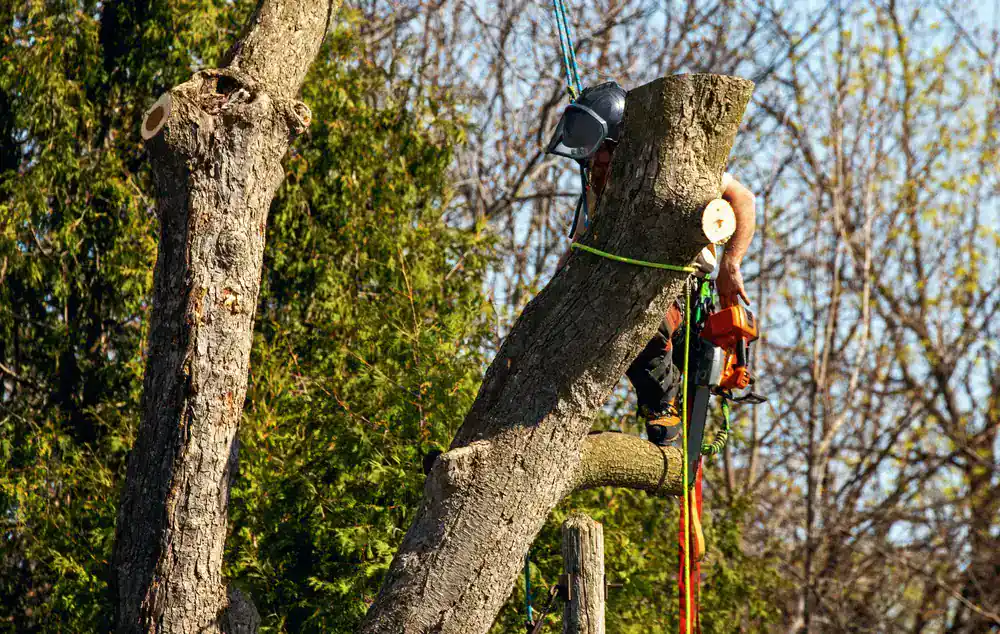
The actual removal depends on the tree and the site. We use proper rigging for trees near structures, climb and section when we can’t just drop it, and bring in a crane if the job requires it. Stump grinding happens after the tree’s down—we go deep enough that you can build over it or plant grass without hitting wood chips two years later.
Cleanup is part of the job, not an extra. We haul debris, rake the area, and leave your property cleaner than most homeowners expect. If we found foundation issues or drainage problems during the work, we talk through what needs to happen next—and we can handle that too, since we’re already set up for masonry and waterproofing.

Ready to get started?
Clearing Land for Foundation Riverhead
Tree removal in Riverhead, NY covers more than just cutting down what’s in the way. You’re getting stump grinding that goes below grade, root removal so you’re not dealing with regrowth, and debris hauling that doesn’t leave piles of wood in your driveway for three weeks. If you’re clearing land for foundation work, we remove rocks, level the site, and address drainage before the excavator shows up.
Pricing depends on tree size, location, and complexity. Riverhead averages run between $275 and $1,191 for standard tree removal, with emergency tree service typically higher due to urgency and risk. Tree removal cost per foot factors in height, diameter, and how close the tree is to structures—but we give you a flat quote after the assessment, not a surprise bill later.
For properties preparing for construction, land clearing includes everything that’s blocking the build: trees, stumps, brush, and obstacles that’ll slow down your foundation crew. We’ve worked with developers and homeowners across Long Island who need sites ready for concrete pours, and we know what “ready” actually means. That includes coordinating with your other contractors so everyone’s on the same timeline.
Arborist consultation is available if you’re not sure whether a tree needs to come down or if it can be saved. We’ll tell you honestly—sometimes trimming is enough, sometimes removal is the only safe option. Either way, you’re getting an answer based on 25 years of experience, not a sales pitch.

How much does tree removal cost in Riverhead, NY?
Tree removal in Riverhead, NY typically costs between $275 and $1,191 depending on the size, location, and complexity of the job. A 30-foot tree in an open yard costs less than a 60-foot oak hanging over your house. Emergency tree service runs higher—usually in the $1,000+ range—because of the urgency and added risk when storms have already damaged the tree.
We price based on what the job actually requires: equipment, crew size, rigging, stump grinding, and haul-away. If you’re clearing multiple trees for a construction project, the per-tree cost usually drops because we’re already mobilized on-site. The quote we give you after the property assessment is what you pay—no surprise fees for “unforeseen complications” that any experienced contractor should have spotted during the walkthrough.
For insurance claims, we provide detailed estimates that adjusters accept. If a tree came down during a storm and damaged your property, documentation matters. We’ve worked with enough insurance companies to know what they need, and we’ll walk you through that process if it applies to your situation.
Do I need a permit to remove a tree in Riverhead?
Suffolk County requires permits for clearing more than 100 square feet of vegetation, and Riverhead has additional regulations depending on tree size and location. If you’re removing a large tree or clearing land for construction, you likely need approval before work starts. We handle permit applications regularly and can tell you exactly what’s required for your property.
The permit process exists to protect wetlands, prevent erosion, and maintain tree cover in residential areas. It’s not just bureaucracy—improper clearing can cause drainage issues that affect your property and your neighbors’. If your tree is dead, hazardous, or causing immediate safety concerns, emergency removal may be allowed without waiting for standard permit approval, but documentation is still required.
We’ve been navigating Riverhead’s permit requirements for 25 years. If your project needs approval, we’ll tell you upfront and help you get it. If you’re in an emergency situation where a tree is actively threatening structures, we’ll document everything properly so you’re covered with the town and your insurance company.
How long does tree removal take from start to finish?
A single tree removal usually takes between two hours and a full day depending on size, location, and site access. A 40-foot tree in your backyard with clear access might be down, ground, and cleaned up in half a day. A 70-foot oak wedged between your house and your neighbor’s fence with underground utilities nearby takes longer because every cut requires rigging and precision.
Land clearing for foundation work typically runs one to three days for a standard residential lot. That includes removing multiple trees, grinding stumps below grade, pulling roots, hauling debris, and rough grading the site. Larger properties or heavily wooded lots take longer. We’ll give you a realistic timeline during the estimate—not a best-case scenario that assumes perfect conditions.
Emergency tree service in Riverhead, NY often happens same-day or next-day if a storm just came through. When a tree is leaning on your house or blocking your driveway, you’re not waiting a week for scheduling. We prioritize emergencies and get crews out fast, but the actual removal still takes as long as it takes to do it safely. Rushing a dangerous tree removal is how people get hurt and properties get damaged.
What happens to the wood and debris after tree removal?
We haul everything away unless you specifically want to keep firewood or logs. The trunk gets cut into manageable sections and loaded onto our trucks. Branches get chipped or hauled whole depending on volume. Stumps get ground into mulch that we remove or spread on-site if you want it for landscaping—though most people don’t because it takes years to fully decompose.
Cleanup is part of the job, not an optional add-on. We rake the area, remove wood chips from flower beds and driveways, and pick up debris that scattered during the work. Your property should look better after we leave, not like a logging operation just came through. That level of cleanup is standard for us because we’ve seen too many tree services that consider their job done once the tree hits the ground.
If you’re clearing land for construction, debris removal is especially important because your foundation crew needs clean access to the site. We coordinate timing so the lot is ready when excavation starts—not still covered in wood piles and root balls that should’ve been hauled away two weeks earlier. After 500+ projects, we know what the next contractor needs to see when they arrive.
Can you remove a tree close to my house without damaging it?
Yes, but it requires rigging, sectioning, and sometimes a crane depending on how close “close” is. We’ve removed trees within five feet of houses, garages, and fences without touching the structures. The process involves climbing the tree, securing sections with ropes, cutting controlled pieces, and lowering them to the ground instead of letting them fall freely.
This is where experience matters. A tree leaning toward your house can’t just be cut at the base—it’ll go exactly where it’s already leaning, which is through your roof. We assess lean, weight distribution, and weak points before making the first cut. If the tree is too risky to climb or rig safely, we bring in a crane to lift sections out from above. That costs more, but it’s cheaper than replacing your siding or repairing foundation damage.
Riverhead properties often have trees planted too close to structures decades ago when they were small. Now they’re 60 feet tall with roots pushing against foundations and branches scraping roofs during windstorms. Removing them without collateral damage is what we do regularly—not occasionally. We’ve handled enough tight-access removals to know what works and what creates expensive problems.
Should I remove a tree before it becomes a problem?
If the tree is dead, diseased, leaning significantly, or has major structural damage, removing it now prevents emergency removal later—usually at twice the cost and ten times the stress. Trees don’t improve with age once they’ve started failing. A dead oak will drop branches during the next storm, and a tree with root rot will eventually come down on its own, possibly onto your house or car.
Arborist consultation helps if you’re unsure. We’ll look at the tree’s condition, root stability, proximity to structures, and species-specific risks. Some trees are worth saving with proper trimming and care. Others are liabilities waiting to become insurance claims. Long Island’s storm patterns—nor’easters, hurricanes, high winds—put extra stress on compromised trees, and saturated soil during heavy rains reduces root stability even for healthy specimens.
The other reason to remove trees proactively is construction planning. If you’re adding onto your house, installing a pool, or building a new foundation, trees in the work zone need to come out anyway. Removing them before construction starts gives you better access, prevents root damage to new foundations, and eliminates the risk of a tree falling onto your project mid-build. We’ve cleared land for hundreds of foundations, and the projects that go smoothest are the ones where trees were handled first—not squeezed in between other trades.