Interior Waterproofing
 Exterior Waterproofing
 Masonry
 Other services
French Drain Systems: How They Work in Long Island Soil
French drains solve basement flooding and yard drainage issues across Long Island, but local soil conditions demand specific installation techniques that generic approaches miss.
Share:
Summary:
Your basement gets damp after every storm. Or your backyard turns into a swamp that takes days to dry out. You know you need better drainage, and you’ve heard French drains work—but you’re not sure how they handle Long Island’s specific soil conditions or which type makes sense for your situation.
Here’s what matters: French drain systems work differently in Nassau County’s sandy coastal soils than they do in the clay-heavy areas inland. The same system that performs well in Massapequa might need adjustments for a property in Syosset. Installation depth, pipe material, outlet planning, and maintenance all depend on understanding how water moves through Long Island’s glacial soil deposits.
This guide breaks down how French drain systems actually work in your specific conditions, what installation involves, and how to choose between interior and exterior options based on your property’s needs.
How a French Drain Works in Nassau County Soil Conditions
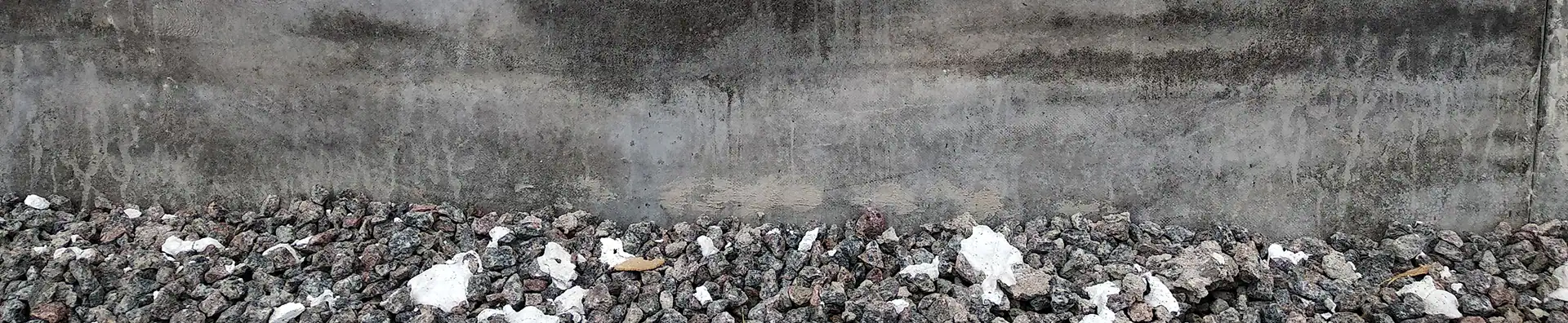
A French drain is essentially a gravel-filled trench with a perforated pipe that collects and redirects water away from problem areas. Water naturally seeks the lowest point and the easiest path. The French drain gives it both—a clear route away from your foundation or yard instead of pooling where it causes damage.
The system relies on gravity and proper slope to move water efficiently. Perforated pipe sits in a bed of gravel, surrounded by more gravel and wrapped in filter fabric. Water seeps through the soil into the gravel, enters the pipe through the perforations, and flows to a designated outlet like a dry well, storm drain, or lower area of your property.
What makes Long Island different is the soil composition. You’re not dealing with uniform conditions across the island. Coastal areas feature sandy soil that drains quickly but carries fine sediment. Inland areas have clay deposits that hold water and create persistent pressure against foundations. Both scenarios work with French drains, but the installation details change based on which soil type dominates your property.
Drain Installation Process for Long Island Properties
Professional drain installation starts with assessing your property’s specific water movement patterns. Where does water collect? Which direction does your yard slope? What’s the soil composition? These factors determine trench depth, pipe routing, and outlet location.
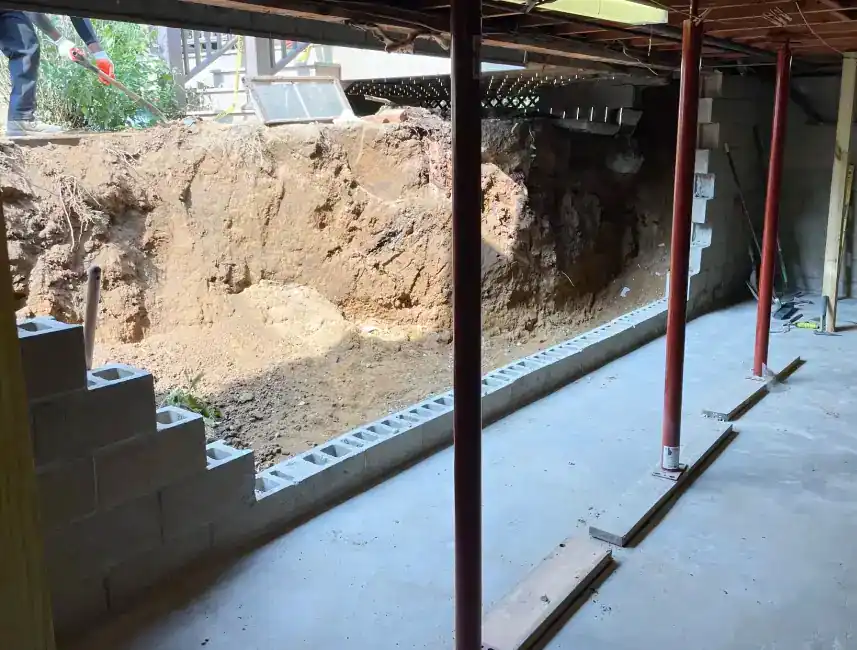
For exterior yard drainage, we dig a trench typically 18 to 24 inches deep, though depth varies based on the water source and frost line considerations. The trench follows a slope of about one percent—roughly one inch of drop per ten feet of pipe. This gradient keeps water moving without creating areas where it pools inside the pipe.
The trench gets lined with landscape fabric to prevent soil infiltration. A layer of gravel goes down first, then the perforated pipe, then more gravel surrounds and covers the pipe. The fabric wraps over the top before backfilling with soil. This “burrito” method prevents Long Island’s sandy or clay particles from clogging the system over time.
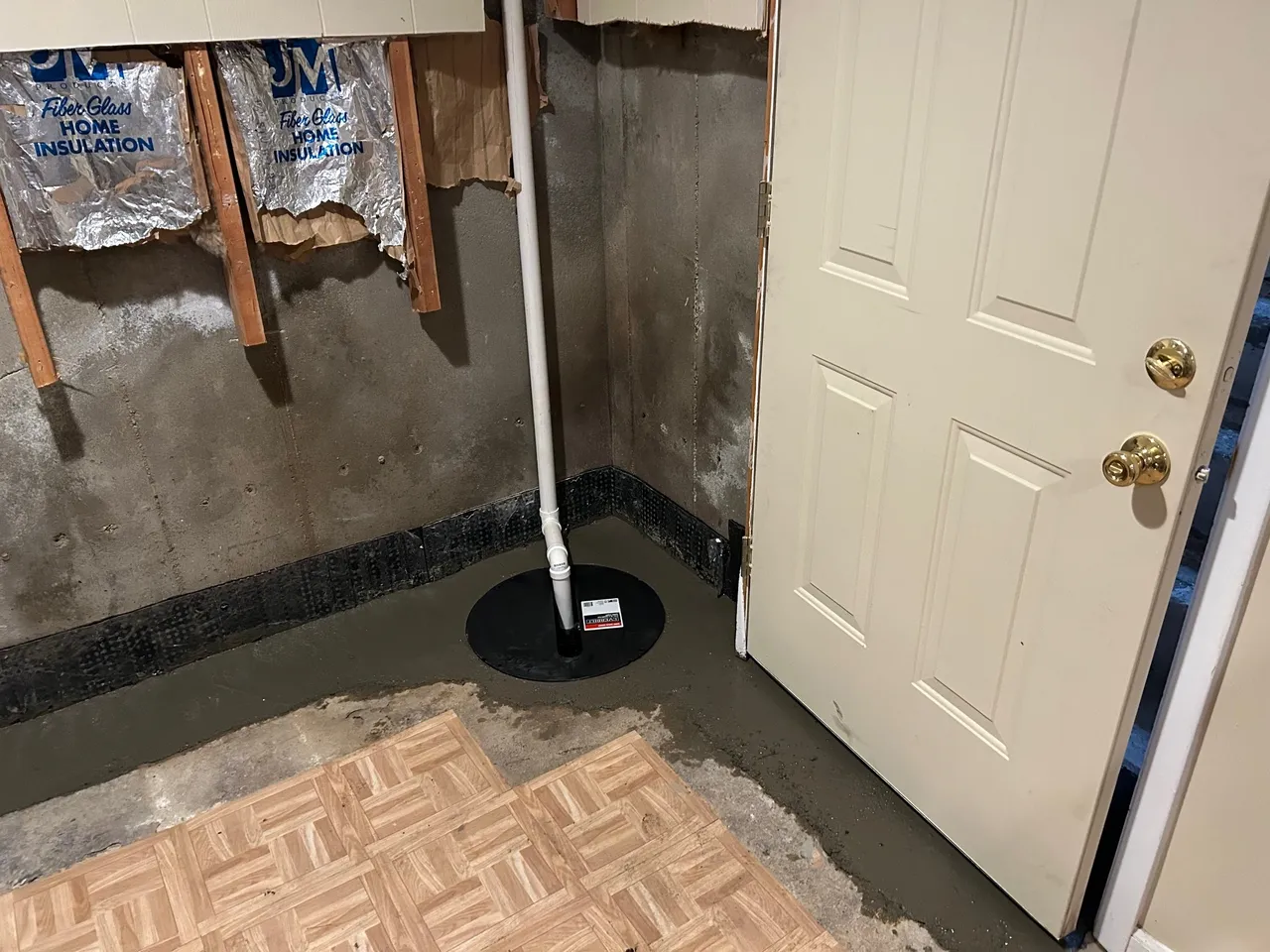
Interior basement systems follow a similar concept but install along the inside perimeter of your basement floor. A jackhammer breaks up the concrete around the edges. The trench gets dug, pipe and gravel installed, and new concrete poured to restore the floor. The water collected flows to a sump pit where a pump ejects it outside, away from your foundation.
Installation timelines depend on system type and property size. Interior basement French drains typically complete in one to two days. Exterior systems take longer due to excavation requirements and landscape restoration needs. Weather affects scheduling—we avoid installing during heavy rain or when soil conditions make excavation difficult.
The outlet location matters as much as the drain itself. Water needs somewhere to go that won’t cause problems for you or your neighbors. Common outlets include dry wells that allow gradual soil absorption, connections to storm drains where permitted, or discharge to lower areas of your property away from structures. Nassau County regulations prohibit directing water onto neighboring properties or public streets without proper approval.
Interior French Drain and Basement Drainage Systems
Interior French drains address basement water problems from inside your home. The system installs along the basement’s interior perimeter, collecting water before it reaches your floor or causes damage to walls and belongings.
The process involves cutting a channel around the inside edge of your basement floor, typically at the base where the floor meets the wall. This location intercepts water at the most common entry point—the joint between foundation wall and floor slab. The perforated pipe sits in gravel within this channel, collecting water and directing it to a sump pump basin.
What makes interior systems particularly effective for Long Island homes is protection from the elements. The pipe isn’t buried under several feet of soil where roots, shifting ground, and sediment cause problems. Maintenance becomes simpler because you can access the system without excavation. If issues develop, you’re not tearing up your landscaping to diagnose and repair them.
Interior basement drainage systems work well in both sandy and clay soil conditions. Sandy coastal soils let water move quickly toward your foundation. Clay-heavy inland soils create hydrostatic pressure that forces water through any crack or gap. The interior French drain relieves that pressure by giving water an easy exit route before it penetrates your living space.
Installation disruption stays minimal compared to exterior work. You’ll need to clear items away from basement walls, and there’s noise from jackhammering concrete. But your yard, driveway, and landscaping remain untouched. Most installations complete in one to two days, and you can use your basement again as soon as the new concrete cures.
Cost runs about half what you’d pay for exterior installation. You’re avoiding the extensive excavation, landscape removal, and restoration that exterior systems require. For a typical Nassau County home, interior systems provide effective protection at a more manageable price point.
The system pairs with a sump pump that actually removes collected water from your property. The French drain channels water to the sump pit. When water reaches a certain level, the pump activates and pushes water through discharge pipes to an appropriate outlet outside. Battery backup systems protect against power outages during storms when you need the system most.
French Drain Cost and Pricing in Nassau County
French drain costs in Nassau County vary based on several factors: system type, linear footage needed, soil conditions, accessibility, and material choices. Understanding these variables helps you budget appropriately and compare estimates accurately.
Interior basement systems generally cost less than exterior installations. You’re avoiding extensive excavation and landscape restoration. Exterior French drain systems in Nassau County typically run $30 to $90 per linear foot. A home needing 100 to 150 feet of drainage could see costs between $3,000 and $13,500 just for the drain installation, before factoring in landscape repair, driveway restoration, or other collateral work.
The price per foot reflects labor intensity, materials, and site-specific challenges. Difficult excavation conditions, rocky soil, or tight access areas increase costs. Properties requiring deeper trenches or longer discharge runs to reach appropriate outlets also see higher totals.

French Drain System Cost and Material Considerations
Material selection impacts both upfront cost and long-term performance. The pipe itself comes in different types, each with distinct price points and durability characteristics. Corrugated plastic pipe costs less initially but can be harder to maintain if clogs develop. The corrugations create ridges where debris accumulates, and the thin walls can’t withstand aggressive cleaning methods.
Solid PVC pipe costs more upfront but offers better long-term value. The smooth interior resists debris buildup and allows for easier maintenance. PVC handles freeze-thaw cycles better than corrugated options, which matters in Long Island’s winter conditions. It’s also more durable if you ever need to snake the line to clear blockages.
Gravel quality and quantity affect costs too. You need enough gravel to surround the pipe adequately and create the necessary drainage bed. Cheaper gravel might contain too many fine particles that defeat the purpose. Quality drainage stone costs more but performs better over decades of use.
Filter fabric adds to material costs but prevents soil infiltration that clogs systems prematurely. Some contractors skip this step to save money, but it typically leads to maintenance problems within years. Proper installation includes fabric that wraps the entire gravel bed, creating that “burrito” configuration that keeps Long Island’s sandy or clay particles out of your drainage system.
Labor represents the largest cost component for most installations. Exterior systems require excavation equipment, multiple workers, and several days of work. Interior systems need skilled concrete cutting, proper sloping despite working in confined spaces, and coordination with sump pump installation. The complexity of your specific situation—property size, existing landscaping, soil type, and access limitations—all influence labor requirements.
Permit costs vary by township within Nassau County. Some municipalities require permits for any drainage work affecting stormwater discharge patterns. Others only require notification or post-installation inspection. We typically handle permit applications as part of our service, saving you time and ensuring compliance with local regulations.
Gravel-free French drain systems offer an alternative that reduces installation time and labor costs. These systems use lightweight polystyrene aggregate wrapped in fabric instead of traditional gravel. They install faster because you’re not hauling and shoveling heavy stone. The tradeoff is higher material cost, though reduced labor often balances the equation.
Cost to Put in a French Drain for Basement vs. Yard Applications
Basement French drain costs differ from yard drainage systems due to installation environment and system complexity. Interior basement systems involve concrete removal and replacement, confined workspace challenges, and integration with sump pump systems. These factors create different cost structures than exterior yard drains.
A typical interior basement French drain installation in Nassau County includes perimeter drainage pipe, sump pump and basin, discharge line routing, concrete restoration, and system testing. The work happens in a controlled environment without weather delays, but requires specialized equipment for concrete cutting and careful attention to proper slope within limited vertical space.
Yard drainage systems face different challenges. Excavation might encounter rocks, roots, or existing utilities. Landscape restoration adds cost—replacing sod, repairing gardens, or reconstructing hardscaping disturbed during installation. The longer the drain run needed to reach an appropriate outlet, the higher your total cost climbs.
French drain systems for yards address surface water and prevent pooling before it reaches your foundation. A french drain backyard installation might run along property lines, around patios, or through low-lying areas where water consistently collects. These systems protect landscaping, prevent erosion, and keep outdoor spaces usable after rain.
Some properties need both interior and exterior systems working together. Interior drains handle water that reaches your foundation. Exterior yard drains intercept surface water before it pools against your house or creates soggy areas. This comprehensive approach costs more initially but provides complete protection that addresses multiple water sources simultaneously.
When comparing estimates, look beyond the per-foot price. What’s included in that number? Does it cover permits, landscape restoration, warranty coverage, and post-installation support? Lower estimates might exclude important elements that become surprise charges later. Higher estimates from experienced contractors often include comprehensive service that prevents future headaches.
The investment pays off through protected home value, eliminated water damage risk, and usable basement or yard space. Basement water problems reduce property values and deter buyers. Soggy yards limit how you can use your outdoor space. Proper French drain installation solves these problems permanently when done right the first time with appropriate materials and techniques for Long Island conditions.
French drain cost per foot calculations should account for your specific situation. Properties with difficult access, extensive landscaping, or complex drainage patterns naturally cost more than straightforward installations. Getting multiple estimates from experienced contractors helps you understand fair pricing for your particular project.
Choosing the Best French Drain Solution for Your Nassau County Property
French drain systems solve water problems across Nassau County, but success depends on matching the system type to your specific situation. Sandy coastal soils, clay-heavy inland areas, high water tables, and seasonal weather patterns all influence which approach works best for your property.
Interior basement systems offer cost-effective protection with minimal disruption to your landscaping. Exterior yard drains handle surface water and prevent pooling before it reaches your foundation. The best pipe for french drain applications in Long Island conditions is typically solid PVC for its durability and maintenance advantages, though corrugated options work in certain scenarios where flexibility matters more than longevity.
We bring 25 years of Nassau and Suffolk County experience to every project, with over 500 completed installations and 150 positive customer reviews confirming our expertise in solving drainage challenges across diverse Long Island properties. Our team understands glacial soil deposits, proper slope calculations, appropriate outlet planning, and quality material selection—all factors that contribute to long-term performance and systems that last decades rather than fail within years.
If you’re dealing with basement moisture, yard flooding, or foundation water concerns, reach out to us for a free estimate and on-site inspection. We’ll assess your specific conditions, explain which french drain around foundation or yard drainage solution protects your home most effectively, and provide transparent pricing backed by comprehensive warranty coverage.
Article details:
- Published by:
- Diamond Masonry & Waterproofing
- Published to:
- Last modified:
- May 4, 2026
Share:
Continue learning: