Turning Your Tax Refund into Home Equity: The Rise of Professional Foundation Crack Repair as a High-ROI Investment
Your tax refund can either disappear on purchases that lose value instantly, or become a smart investment in foundation crack repair that protects your Long Island home and builds equity.
Share:
Summary:
Your tax refund just hit your account. You’ve got options: a vacation that’s over in a week, new electronics that depreciate the moment you unbox them, or an investment that actually builds wealth. If you’re a Nassau or Suffolk County homeowner staring at foundation cracks after another brutal Long Island winter, that refund represents something bigger than a spending spree—it’s your chance to stop a problem that only gets more expensive the longer you wait.
Foundation crack repair might not sound exciting compared to a kitchen remodel, but here’s what matters: it’s one of the few home improvements that prevents catastrophic loss rather than just adding convenience. And right now, in early spring, you’re in the perfect window to address post-winter damage before the next freeze-thaw cycle makes those cracks worse.
Why Foundation Crack Repair Outperforms Most Home Improvement Investments
Most home improvements add value. Foundation crack repair protects the value you already have—and that’s a crucial distinction. When you invest your tax refund in fixing foundation cracks, you’re not just patching concrete. You’re preventing water intrusion that can cost $11,000 to $29,000 per flooding incident, stopping mold growth that reduces home value by up to 25%, and avoiding structural damage that can run $10,000 to $30,000 when left unaddressed.
The math is straightforward. Early foundation crack repair in Nassau or Suffolk County typically costs $500 to $3,000 for standard residential work. Wait until those cracks widen, water damage spreads, and structural issues develop? You’re looking at $10,000 to $30,000 or more. Your tax refund covers the preventive fix entirely, and you pocket the difference by avoiding the emergency repair.
Unlike consumer purchases that lose value immediately, foundation repairs add to your home’s cost basis. That means when you eventually sell, every dollar spent on legitimate foundation work increases your equity. Real estate disclosure laws in New York require sellers to reveal foundation problems, and buyers routinely negotiate 10% to 20% discounts on homes with known structural issues.
How Long Island's Post-Winter Conditions Create Urgent Repair Needs
Long Island’s freeze-thaw cycles are particularly brutal on foundation concrete. Water seeps into hairline cracks during fall and winter, then freezes and expands when temperatures drop. That expansion pushes the crack wider, allowing more water penetration during the thaw. Repeat this cycle through several months, and a barely-visible crack in October becomes a structural concern by March.
Nassau and Suffolk Counties face additional challenges that most foundation repair guides don’t address. The clay-heavy soils common inland expand and contract with moisture levels, putting uneven pressure on foundation walls. Coastal areas deal with sandy soils that shift differently, plus salt air that accelerates concrete deterioration. High water tables across much of Long Island mean hydrostatic pressure constantly pushes against basement walls, exploiting any weakness it finds.
Spring maintenance isn’t just a suggestion for Long Island homeowners—it’s essential prevention. The ground is thawing, revealing cracks that developed or worsened over winter. Spring rains are coming, and those cracks become water entry points. Address them now, before the next freeze-thaw season, and you stop the damage cycle. Wait until next spring, and you’re dealing with bigger cracks, more water damage, and exponentially higher repair costs.
We see the same pattern every year. Homeowners notice a small crack in fall, think “I’ll deal with that in spring,” then discover by the following spring that the crack has tripled in width and water is seeping through. The repair that would have cost $800 in October now costs $3,000 in April, and if water damage has started, add another $2,000 to $5,000 for remediation. Your tax refund covers the preventive fix. It doesn’t cover the emergency repair plus water damage plus mold remediation.
Foundation cracks don’t improve with time. They don’t stay the same. They get worse, and the rate of deterioration accelerates once water intrusion begins. That’s why spring, right after winter damage becomes visible but before summer storms test your foundation, is the optimal repair window. You’re not interrupting the problem mid-cycle—you’re stopping it before the next cycle begins.
What Professional Foundation Crack Repair Actually Costs in Nassau and Suffolk County
Let’s talk real numbers, because vague cost ranges don’t help you plan. For a typical Long Island home with standard foundation crack issues—a few vertical or diagonal cracks under 1/4 inch wide, no active water intrusion, no structural bowing—professional repair runs $500 to $3,000. That includes inspection, crack injection with polyurethane or epoxy, and warranty.
Single crack repairs using professional-grade injection typically cost $250 to $800 per crack, depending on length and location. Most homeowners dealing with post-winter damage have two to four cracks that need attention, putting total costs in the $1,000 to $2,500 range. Your average tax refund in 2026 is around $3,000, which covers this repair entirely with money left over.
More complex situations cost more, but you’ll know before work begins. Horizontal cracks, which indicate serious pressure issues, require more extensive repair and often need additional drainage solutions. Costs for these situations range from $2,800 to $8,000. Major structural repairs requiring underpinning or foundation stabilization can reach $10,000 to $30,000, but these are situations where foundation problems have been ignored for years, not the result of addressing cracks when they first appear.
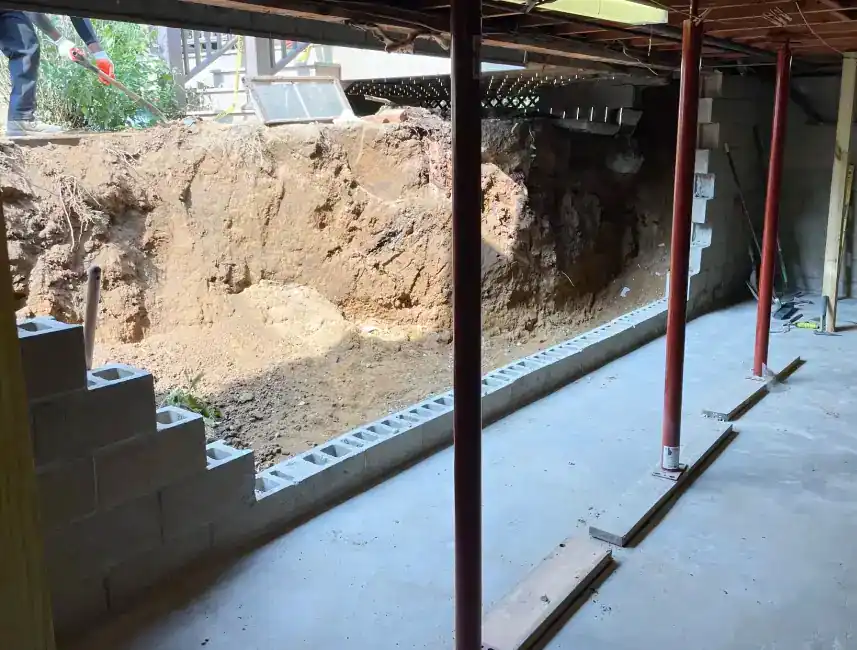
Here’s what drives costs up or down. Crack location matters—interior basement cracks are easiest to access and repair. Exterior foundation cracks require excavation, which adds labor and materials. Crack type matters—settlement cracks from normal home settling are straightforward fixes, while pressure cracks from hydrostatic force or soil movement need both crack repair and drainage improvements to prevent recurrence.
The number of cracks obviously affects total cost, but there’s often a volume discount when addressing multiple cracks in one visit. When we’re already set up for foundation work, we can add additional crack repairs for less than the per-crack rate you’d pay for individual service calls. Ask about this when getting estimates—it can save $200 to $500 on multi-crack repairs.
Geographic location within Nassau and Suffolk Counties can influence pricing slightly, with coastal areas sometimes commanding premium rates due to the additional complexity of salt air and sandy soils. But the variation is minor compared to the cost difference between early repair and delayed emergency work. A crack repair that costs $700 in Huntington and $800 in the Hamptons still beats the $5,000 emergency repair you’ll face if you wait until water damage starts.
We offer free inspections and written estimates. Take advantage of this. You’ll get a precise cost breakdown for your specific situation, not a vague range. You’ll also get expert assessment of whether your cracks are urgent (address immediately), important (address this season), or monitoring situations (check again in six months). That information alone is valuable, and it costs you nothing.
The Strategic Timing of Spring Foundation Repairs Using Tax Refund Money
Tax refunds typically arrive between February and April, perfectly coinciding with the post-winter inspection window. This timing isn’t coincidental—it’s ideal for Long Island homeowners. Winter damage is now visible, spring storms haven’t started in earnest, and you have funds available for immediate action.
Spring foundation maintenance ranks among the top five most important seasonal home tasks, right alongside gutter cleaning and HVAC servicing. The difference is that foundation repairs prevent catastrophic loss while other maintenance prevents inconvenience. Your HVAC failing in July is uncomfortable and expensive. Your foundation failing is a structural emergency that threatens your home’s habitability and value.
Using your tax refund for foundation crack repair makes financial sense beyond just having the money available. Tax refunds represent “found money” in most household budgets—a lump sum that isn’t already allocated to monthly expenses. That makes it psychologically easier to invest in important but unglamorous repairs that you might otherwise defer. You’re not pulling money from savings or taking on debt. You’re redirecting a windfall toward protecting your largest asset.
How Foundation Crack Repair Compares to Other Tax Refund Spending Options
Let’s compare. Spend $3,000 on a vacation, and you have memories and photos. Nice, but zero financial return. Spend $3,000 on new electronics or furniture, and you have items that depreciate immediately and are worth perhaps $1,500 in six months. Spend $3,000 on foundation crack repair, and you have increased home equity, prevented potential $10,000+ emergency repairs, and protected your home’s resale value.
The return on investment for foundation crack repair isn’t immediate and visible like a kitchen remodel, but it’s more certain. Kitchen remodels return 50% to 70% of cost at resale if you’re lucky and the buyer likes your choices. Foundation repairs return 100% of cost by preventing value loss. A home with disclosed foundation problems sells for 10% to 20% less than comparable homes without issues. On a $500,000 Long Island home, that’s $50,000 to $100,000 in lost value. Your $3,000 repair prevents that loss.
Foundation work also qualifies as a capital improvement in many cases, which means it adds to your home’s cost basis for tax purposes when you sell. While you can’t deduct the repair cost in the year you make it, it reduces your capital gains tax burden when you eventually sell your home. Consult a tax professional for your specific situation, but this is another way foundation repairs deliver financial value beyond the immediate fix.
Compare this to other common tax refund uses. Paying down credit card debt is smart financial planning, but it doesn’t build equity—it just reduces negative equity. Adding to emergency savings is prudent, but those funds sit idle until needed. Foundation crack repair is both protection and investment. You’re preventing emergency situations while simultaneously protecting and potentially increasing your home’s value.
Some homeowners consider DIY foundation repair to save money. The materials cost $30 to $300 depending on what you buy. But here’s the reality: store-bought hydraulic cement and sealants typically fail within two to five years. They don’t flex with your foundation’s natural movement, they don’t address underlying water pressure issues, and they often trap water behind the patch, making damage worse. Professional crack injection using polyurethane or epoxy creates flexible, waterproof seals that move with your foundation and often prove stronger than the surrounding concrete.
The DIY approach saves money upfront but costs more over time. You spend $200 on materials and a weekend on labor, the repair fails in three years, and now you’re paying a professional $3,500 to fix both the original crack and the damage your failed DIY attempt caused. Or you spend $2,500 now for professional work that lasts decades and comes with a warranty. The math favors professional repair, especially when you have tax refund money available to cover the cost without impacting your regular budget.
Beyond Crack Repair: Comprehensive Foundation Protection as a Complete Investment
Foundation crack repair often reveals or prevents related issues that protect your investment further. When we conduct crack inspections, we frequently identify drainage problems, grade issues, or early signs of water damage that homeowners haven’t noticed yet. Addressing these during the same service call prevents future problems and often costs less than handling them separately later.
French drain installation, for example, typically accompanies foundation crack repair when hydrostatic pressure is the underlying cause. The crack repair stops current water intrusion, but without addressing the pressure forcing water against your foundation, new cracks will develop. A French drain system redirects groundwater away from your foundation, eliminating the pressure. Combined cost for crack repair plus French drain typically runs $3,000 to $7,000, which is still less than the emergency structural repair you’d face if pressure cracks continue developing.
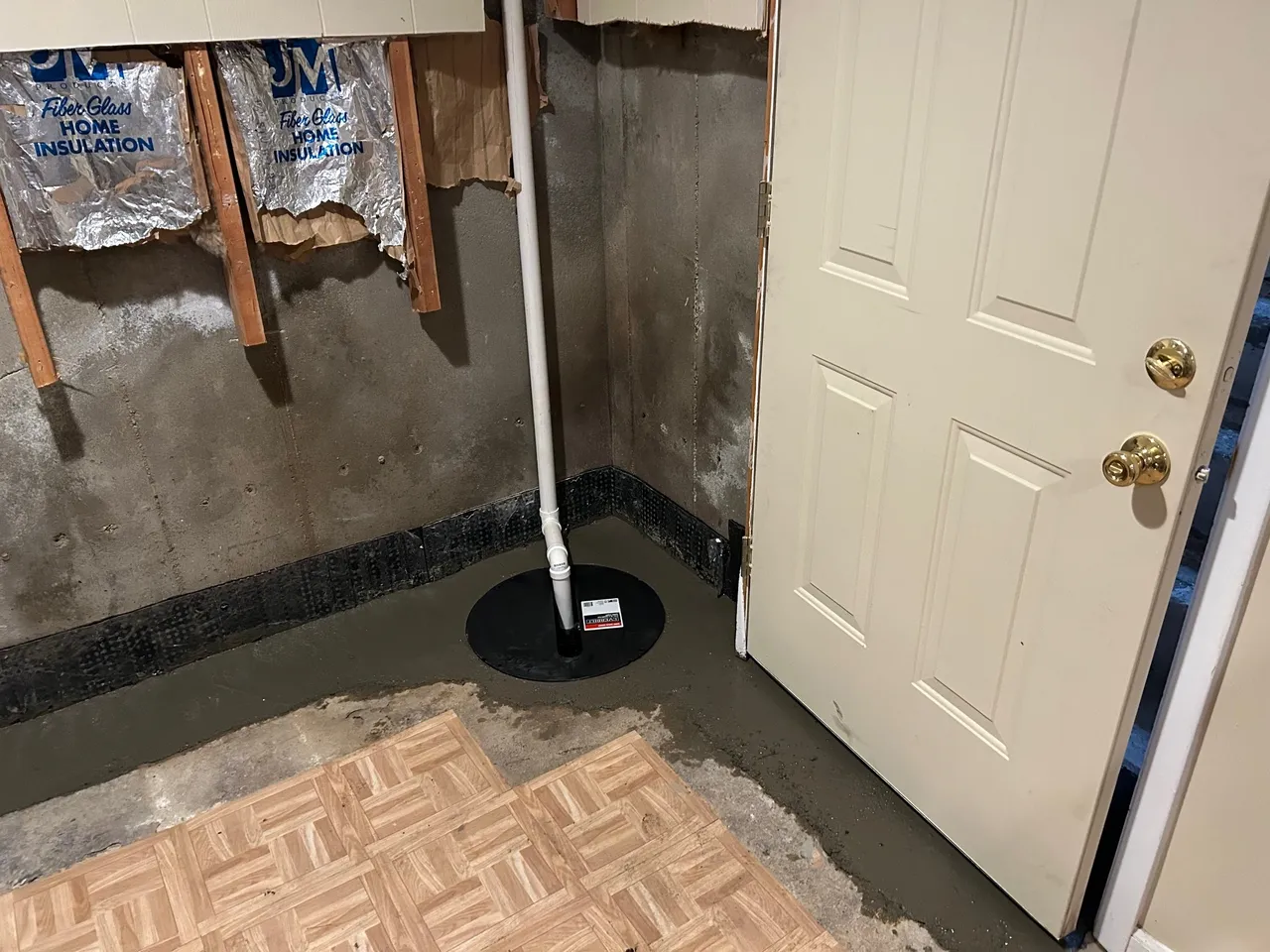
Sump pump installation is another complementary service that many Long Island homeowners add during foundation work. If your basement has water issues or you’re in a flood-prone area, a sump pump provides active protection against water accumulation. Installation costs $1,000 to $3,500 in New York, and when combined with foundation crack repair, you’re creating a comprehensive water management system. Your tax refund might not cover everything, but it makes a significant dent in the total cost, and we offer financing options for the balance.
Foundation grading corrections address water pooling near your home’s perimeter. If the ground slopes toward your foundation instead of away from it, every rain sends water directly against your basement walls. Regrading costs $500 to $3,000 depending on the extent of work needed, but it’s prevention that pays for itself by stopping water before it reaches your foundation. Combined with crack repair, you’re fixing current damage and preventing future damage in one project.
The comprehensive approach costs more upfront than just patching visible cracks, but it delivers better long-term value. Think of it like fixing a leaky roof. You can patch the hole where water is coming through, or you can patch the hole and replace the damaged shingles that will leak next month. The comprehensive fix costs more initially but less over time because you’re not making multiple service calls for related problems.
We offer bundled pricing for comprehensive foundation protection. You get crack repair, drainage improvements, and waterproofing as a package for less than you’d pay for each service separately. Ask about this when getting your estimate. Your tax refund might cover the crack repair alone, but financing options can extend to cover the comprehensive approach, and the monthly payment is typically less than the emergency repair costs you’re preventing.
With over 25 years serving Nassau and Suffolk Counties, we’ve built our reputation on this comprehensive approach. We don’t just patch cracks—we identify underlying causes, address hidden issues like overlooked damage or drainage problems, and create lasting solutions. We’ve completed 500+ projects with 150+ positive customer reviews because we understand that Long Island homeowners need solutions that work with local soil conditions, water tables, and climate challenges, not generic fixes that fail in three years.
Making Your Tax Refund Work for Your Home's Future
Your tax refund is temporary. The investment you make with it doesn’t have to be. Foundation crack repair transforms a short-term windfall into long-term protection and value. You’re not spending money on repairs—you’re preventing catastrophic loss, protecting your home’s equity, and ensuring that small problems don’t become structural emergencies.
Spring is your window. Post-winter damage is visible, repair costs are manageable, and your tax refund provides the funds without impacting your regular budget. Wait until cracks widen, water intrusion starts, or structural issues develop, and you’re facing emergency repairs that cost three to ten times more than preventive work.
For Nassau and Suffolk County homeowners, foundation crack repair isn’t optional maintenance—it’s essential protection against Long Island’s unique climate and soil challenges. Freeze-thaw cycles, high water tables, clay and sandy soils, and coastal humidity all work against your foundation. Professional repair, done right and done now, stops these forces before they cause serious damage. If you’re ready to turn your tax refund into lasting home equity and real protection, reach out to us for a thorough inspection and honest assessment of what your foundation needs.
Article details:
- Published by:
- Diamond Masonry & Waterproofing
- Published to:
- Last modified:
- April 28, 2026
Share: