
 Interior Waterproofing
 Exterior Waterproofing
 Masonry
 Other services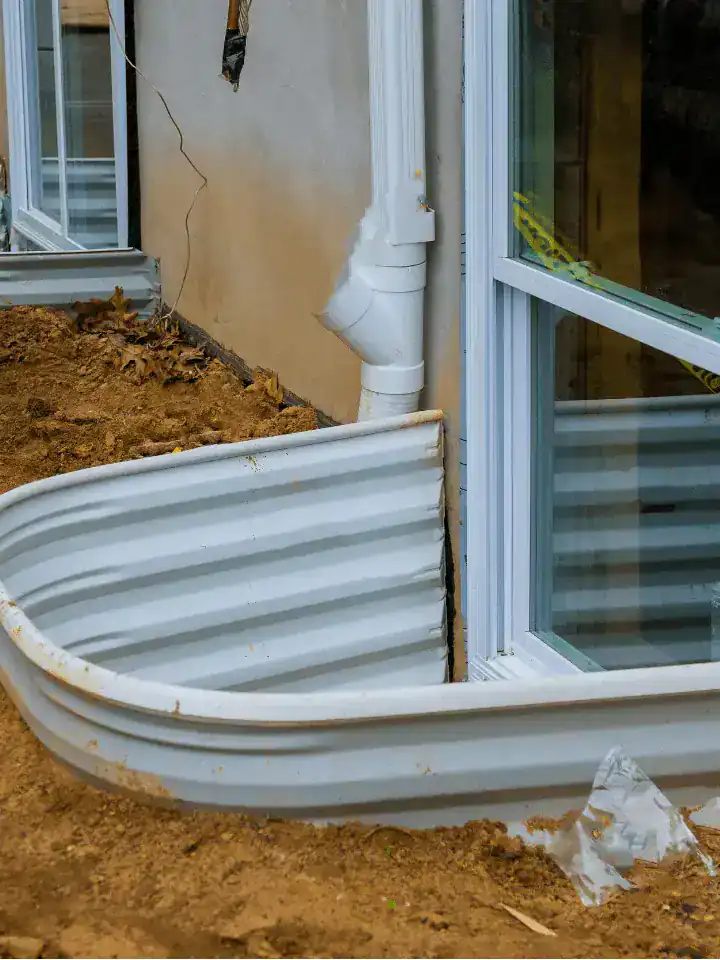
Summary:
Why Suffolk County Basements Need Egress Windows
Walk down into your basement. Is someone sleeping there? Could someone sleep there? Then you need an egress window, and New York State isn’t flexible about this.
An egress window is an emergency escape route sized so people can get out fast during a fire and firefighters can get in to help. Without one, your basement bedroom breaks the law. More importantly, it puts whoever sleeps there in real danger.
House fires move faster than most people realize. The stairs might not be an option. That egress window becomes the difference between getting out safely and not getting out at all. That’s why the code exists, and that’s why inspectors take it seriously in Nassau and Suffolk Counties.
Egress Window Requirements for Legal Basement Bedrooms in NY
New York follows specific egress window code requirements that every Suffolk County basement bedroom must meet. The numbers aren’t negotiable.
Minimum opening area: 5.7 square feet. Minimum height: 24 inches. Minimum width: 20 inches. Maximum sill height above floor: 44 inches. If your window sits below ground level, you need a window well that’s at least 9 square feet with 36-inch width and projection.
Window wells deeper than 44 inches require a permanently attached ladder or steps. These aren’t suggestions from some overzealous inspector. They’re life-safety requirements based on how quickly people need to exit during emergencies.
Most Suffolk County towns also require 7-foot ceiling height for habitable basement space. Some areas add local requirements based on soil conditions or water table levels. Long Island’s sandy coastal soils behave differently than inland clay deposits, and we understand those differences from working here regularly.
The legal side matters too. You can’t market a basement room as a bedroom when selling without proper egress. You can’t legally rent it out. If you’re using it as a bedroom anyway, you’re risking fines, failed inspections, and serious liability if something happens.
Buyers’ home inspectors will flag illegal bedrooms every time. That discovery tanks deals or forces you to drop your asking price significantly. Professional egress window installation eliminates the problem and usually adds more value than it costs.
What Egress Window Installation Actually Costs on Long Island
Let’s talk real money. Complete professional egress window installation in Suffolk County runs $5,000-$7,500 for most homes. That covers cutting through foundation walls, installing code-compliant windows, building and waterproofing window wells, adding proper drainage, and finishing everything inside and out.
Complex projects with difficult soil, utility relocation, or premium materials might push toward $9,000. But the typical Suffolk County installation lands in that $5,000-$7,500 range.
Now look at your tax refund. The average for 2026 is running around $3,800, with many Long Island homeowners getting $5,000-$6,000 or more back. Your refund covers most or all of the installation cost.
Here’s what you’re actually buying. You’re creating legal living space that appraisers count toward home value. You’re adding a bedroom to your property’s official count, which typically increases value by $15,000-$30,000 in Nassau and Suffolk Counties. You’re making your basement safer. You’re bringing natural light into dark space.
The return on investment runs 200-300%. For every dollar spent, you’re adding two to three dollars in home value. Very few home improvements deliver that kind of return.
Planning to rent out basement space? A legal basement bedroom in Suffolk County generates $800-$1,500 monthly in rental income. That’s $9,600-$18,000 per year. Your egress window pays for itself in months through rent alone.
Bonus: proper egress windows can lower homeowners insurance premiums. Insurance companies recognize that code-compliant safety features reduce risk, and some offer specific discounts for egress window installation in basement sleeping areas.
Creating Legal Basement Living Space in Nassau and Suffolk Counties
You’ve been using your basement for years. Storage, laundry, maybe a home gym or office. But there’s a massive difference between using basement space and having legal, habitable basement space that counts toward your home’s value.
Legal living space meets all building codes for safety, light, air quality, and emergency egress. You can officially count it as a bedroom when selling. You can legally rent it out. Your home is worth more on paper and in reality.
The transformation doesn’t require gutting everything. If ceiling height meets code and your foundation is sound, adding an egress window might be the main thing standing between your current setup and a legal bedroom that adds serious value.
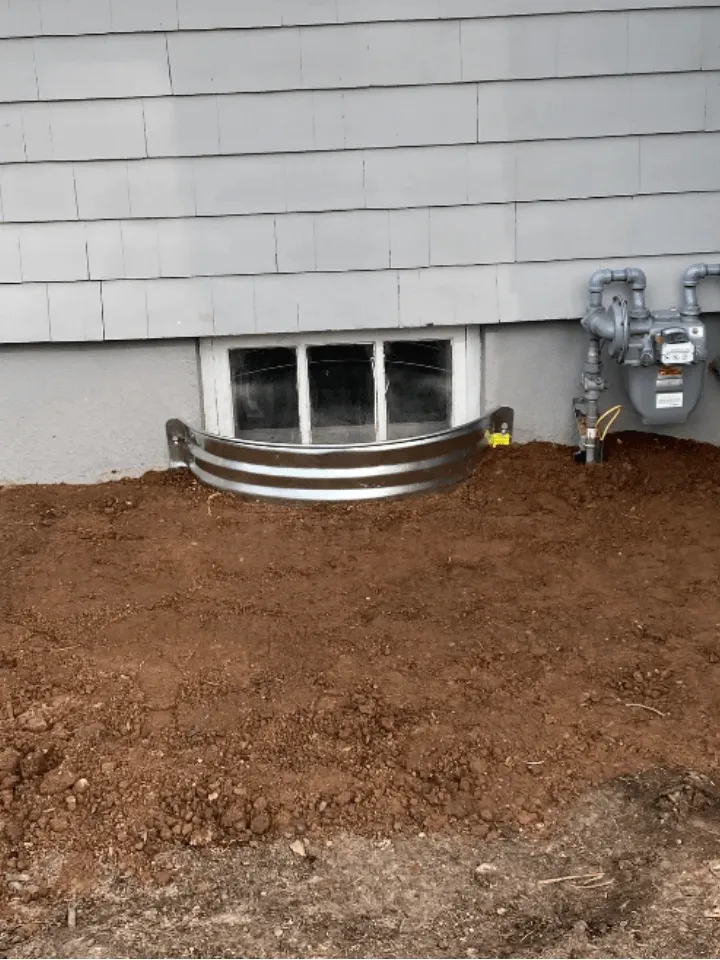
Requirements for Legal Basement Bedrooms on Long Island
Creating a legal basement bedroom in Suffolk County involves specific requirements that protect homeowners and occupants.
Ceiling height matters first. Most Nassau and Suffolk County towns require at least 7 feet of clear ceiling height for habitable basement space. If you’re creating a bedroom, you want that full 7-foot clearance to meet code and pass inspection.
Every bedroom needs two means of egress—usually stairs to the main floor plus an egress window or exterior door meeting size and accessibility requirements. You need both, not one or the other.
Light and ventilation requirements come next. The egress window serves double duty, providing emergency escape plus the natural light and fresh air that codes require for habitable space. Most regulations call for window area equal to at least 8% of the room’s floor area.
Electrical and mechanical systems must meet current code. Proper outlets, lighting, heating, and smoke detectors. Adding a bedroom usually means adding electrical work, which requires permits and inspections.
Moisture control is critical in Long Island basements. High water tables and soil conditions across Nassau and Suffolk Counties make waterproofing non-negotiable. You need proper drainage around egress window wells, sealed foundation walls, and often sump pump systems to keep space dry year-round.
We handle all these requirements as part of installation. We know which permits you need, what local inspectors look for, and how to design systems that work with your specific property’s challenges.
The goal isn’t just passing inspection. It’s creating space that’s genuinely safe, comfortable, and valuable—a legal basement bedroom that feels like a real bedroom, bright and dry with proper ventilation and easy emergency exit.
How Much Value Egress Windows Add to Suffolk County Homes
Let’s get specific about money. Adding a legal basement bedroom to your Suffolk County home fundamentally changes how appraisers value your property.
Real estate appraisers count legal bedrooms in their calculations. A three-bedroom home sells for significantly more than a two-bedroom home of the same size in the same neighborhood. In Nassau County, where median home prices hit $795,000 in early 2025, and Suffolk County, where prices reached $680,000, adding a bedroom creates substantial value.
Homes with additional bedrooms typically command $15,000-$30,000 more than comparable properties with fewer bedrooms. That’s the direct impact of converting basement space into legal living space with proper egress.
But there’s more. Appraisers also look at total livable square footage. Without proper egress, finished basements might only be valued as storage or utility space. With code-compliant egress, that same space gets valued as habitable square footage—typically at 50-70% of what above-grade living space is worth.
Example: You have a 400-square-foot basement bedroom. In a Suffolk County market where above-grade space might be valued at $300 per square foot, that basement bedroom could add $60,000-$84,000 in appraised value at 50-70% of above-grade rates. Even accounting for $5,000-$7,500 installation cost, you’re looking at massive net gain.
Planning to rent the space? A legal basement apartment or bedroom in Suffolk County generates $800-$1,500 monthly. That’s passive income continuing month after month, year after year. Your egress window installation pays for itself within months through rental income alone.
Marketability matters too. When you eventually sell, legal basement living space makes your property more attractive to buyers. Young families see room for kids or guests. Multi-generational households see space for aging parents or adult children. Investors see rental income potential. Broader appeal means more interested buyers and potentially multiple offers.
Turning Your 2026 Tax Refund Into Lasting Home Value
Your 2026 tax refund represents a real opportunity—not just to cover bills or take a vacation, but to make a lasting investment in your Suffolk County home’s safety, value, and functionality.
Egress window installation checks every box. Makes your basement legally habitable. Creates a critical safety exit for your family. Adds substantial value to your property. Brings natural light into dark basement space. The cost aligns almost perfectly with what many Long Island homeowners are receiving in tax refunds this year.
This isn’t about spending money. It’s about converting a one-time payment into permanent home equity and ongoing benefits. It’s about doing something now that protects your family and pays you back multiple times over when you eventually sell.
We’ve served Nassau and Suffolk Counties for over 25 years, completing more than 500 projects with the attention to detail and code compliance that Long Island homeowners need. If you’re ready to turn your tax refund into a smart home safety investment, reach out to us for a consultation on egress window installation that meets New York State requirements and adds real value to your property.